10 Product Launch Strategies to Win in 2026
Discover 10 expert product launch strategies for SaaS & e-commerce. Our guide covers pre-launch, launch, and post-launch with actionable steps & KPIs.
What separates a launch that fades after a spike of attention from one that keeps producing pipeline, users, and usable feedback for months?
The answer is rarely the announcement. It is the work done before launch, the coordination during launch week, and the discipline to measure what happened after the first wave of traffic hits.
Teams often treat launch day like a campaign deadline. They publish the landing page, send the announcement email, post on social, and wait for demand to appear. In practice, that creates weak launches because positioning is still fuzzy, onboarding still has friction, and acquisition channels are being tested with real budget for the first time.
Strong product launch strategies work as a system across three phases: pre-launch validation, launch execution, and post-launch iteration. Decisions made early affect everything that follows. Research shapes positioning. Positioning shapes messaging. Messaging shapes conversion paths, onboarding, outbound scripts, partner outreach, paid creative, and community response.
I have seen the same trade-off in both SaaS and e-commerce. Teams that rush to maximize reach usually get more noise than signal. Teams that sequence the launch properly tend to learn faster, fix the right problems, and scale with fewer wasted dollars. If you need a quick way to validate demand before building the full motion, a fake door test for early launch validation can help you measure interest before you commit heavy resources.
That is the lens for this guide. These 10 strategies are not presented as generic tips or isolated tactics. Each one is laid out as an execution framework with concrete implementation steps, KPIs to watch, A/B test ideas worth running, and examples specifically for SaaS and e-commerce teams.
Use them selectively. A self-serve SaaS product may start with beta access, Product Hunt, and content. A higher-ACV B2B product may get better results from partnerships, outbound, and webinars. A consumer brand may pair creator seeding with paid acquisition and community-led proof. The right launch strategy depends on the product, price point, sales motion, audience trust level, and how quickly the team can respond once real users arrive.
The goal is not a louder launch. The goal is a launch system that produces traction you can keep building on.
1. Soft Launch / Beta Testing Strategy
How much risk do you want to carry into launch day?
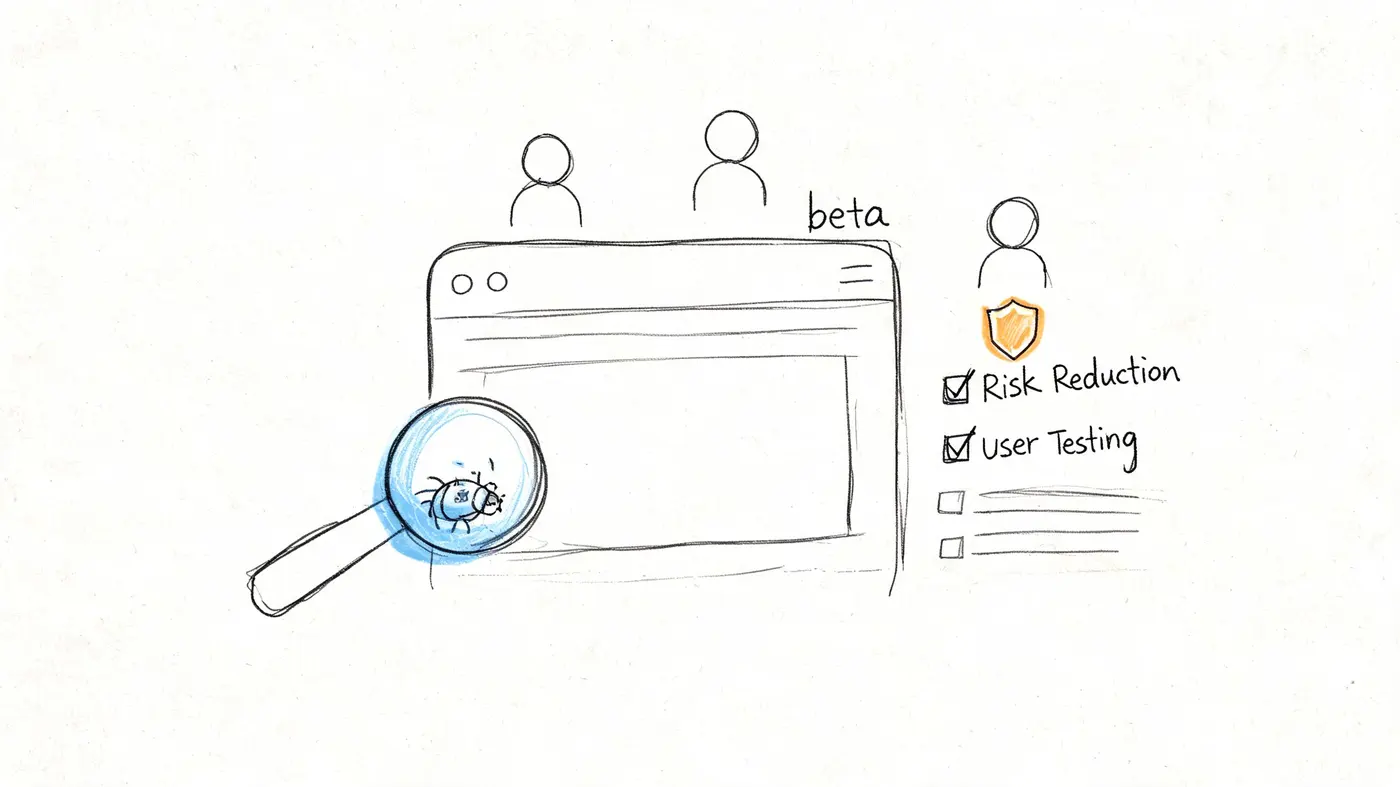
A soft launch reduces it. The goal is to expose the product to a small, representative group, find the friction that blocks activation, and fix it before paid traffic, PR, or platform visibility amplify the wrong signals. Gmail, Slack, and Figma all used controlled early access well, but the lesson is not “copy famous companies.” The lesson is to control who gets in, what you measure, and how quickly the team can respond.
For SaaS, the beta group should match the eventual buyer and user. An experimentation tool should recruit growth marketers, CRO leads, e-commerce operators, and the developers who handle implementation. For e-commerce, the same rule applies. A post-purchase upsell app should be tested with merchants who already have order volume, not hobby stores that cannot generate enough sessions to reveal real usage patterns.
What to test before you scale
Good beta programs answer operational questions, not vanity ones.
- Integration friction: Measure how many users can install and configure the product on Shopify, Webflow, WordPress, or WooCommerce without support intervention.
- Activation quality: Track the percentage of sign-ups who reach the first meaningful outcome. BrainKraft's product launch statistics summary highlights activation rate as a useful indicator for launch health, and in practice it is one of the fastest ways to spot whether onboarding or product value is breaking down.
- Feedback routing: Separate bug reports, usability issues, and feature requests into different channels so the team can triage fixes properly instead of mixing urgent blockers with roadmap ideas.
- Time to value: Record how long it takes new users to complete the first task that proves the product works.
A waiting list also has a job beyond collecting emails. It helps you qualify demand, sequence invites, and compare interest by segment. If you want to validate intent before committing to the full build or rollout, run a fake door test for early launch validation.
Practical rule: End the beta with a ranked list of blockers, onboarding gaps, and objections tied to specific user segments.
Implementation steps, KPIs, and A/B test ideas
Start with a fixed beta cohort and a clear entry rule. I usually recommend 25 to 100 accounts for an early SaaS beta, depending on implementation complexity and support capacity. Give every participant a defined onboarding path, a feedback form, and one owner on your team. Then review issues twice a week, ship fixes in batches, and remove low-signal participants who are curious but not serious.
Watch four KPIs closely: activation rate, onboarding completion, support tickets per account, and time to first value. For e-commerce apps, add install-to-live rate and the percentage of merchants who launch their first campaign or test. For SaaS, track workspace setup completion and the share of users who invite a teammate, connect data, or publish the first workflow.
Run small A/B tests during the beta. Test a checklist onboarding flow against a guided setup wizard. Test “launch your first test” against “find revenue leaks” for e-commerce messaging. Test a plain-text welcome email against a product-led email with screenshots and a single CTA. The trade-off is speed versus control. Too many tests create noise in a small sample. Too few tests leave obvious conversion gains untouched.
A soft launch works when it produces usable evidence, not general optimism. If the beta cannot tell you who activates, where they stall, and which fixes improve conversion, the team is not ready to scale.
2. Product Hunt / Launch Platform Strategy
Some launches need distribution more than explanation. Product Hunt, AppSumo, and Capterra can help when you want visibility among active software buyers, early adopters, and curious operators looking for tools right now. Notion and Zapier both benefited from communities that like discovering and discussing products, not just consuming ads.
This approach works best when the product is easy to grasp quickly. If someone lands on your listing and can't understand the problem, audience, and benefit in seconds, discovery-platform traffic won't save you.
How to prepare the listing properly
Lead with one core use case, not your full roadmap. A Shopify merchant should immediately see why your product matters for storefront conversion. A CRO lead should immediately understand how testing works. A maker profile also matters more than expected. Buyers ask implementation questions fast, and generic replies kill trust.
A short demo helps if the product has visible speed or usability advantages. This is worth reviewing before you post:
Use the launch window actively. The first day or two usually determines whether the listing turns into a real pipeline source or just a vanity spike.
What to watch during the launch window
- Comment quality: Are prospects asking tactical questions or just reacting politely?
- Profile-to-sign-up flow: Does the listing promise the same thing the landing page explains?
- Offer fit: Extended trials or launch-only onboarding support often work better than broad discounting for B2B SaaS.
Strong maker responses often outperform polished copy. Buyers remember whether the team seemed credible and available.
For SaaS launches, I'd A/B test the headline, thumbnail, first screenshot, and CTA language on the linked landing page. For e-commerce apps, test whether “works with Shopify” or the business outcome should appear first.
3. Content Marketing & Thought Leadership Strategy
What do you do when the product is strong, the market needs education, and the launch budget will not carry awareness on its own?
Use content to shorten the distance between confusion and intent. A good content-led launch teaches buyers how to evaluate the category, shows where your product fits, and gives sales and growth teams assets they can reuse for weeks after launch. That matters for SaaS products with longer evaluation cycles and for e-commerce tools that need to prove a clear revenue or operations outcome before a merchant installs anything.
The mistake is publishing launch content that reads like a press release. Buyers need decision support. They want to understand the problem, the trade-offs between options, the implementation work, and the expected result.
A useful framework is to build content in three layers:
- Problem-aware content: Explain the business issue in plain terms. For SaaS, that might be slow onboarding, low activation, or poor experiment throughput. For e-commerce, it could be abandoned carts, weak merchandising, or inaccurate attribution.
- Solution-aware content: Compare approaches, constraints, and setup choices. Publish buyer guides, implementation checklists, and side-by-side comparisons that help a team choose a path.
- Decision-stage content: Create product-led assets such as use-case pages, setup walkthroughs, ROI calculators, migration guides, and integration documentation for platforms like Shopify, Webflow, WooCommerce, or WordPress.
Execution matters more than volume. One strong launch cluster often beats a rushed calendar of thin posts. I usually want one flagship asset, two or three supporting pieces, a sales enablement version of the same argument, and a landing page that converts the traffic each piece earns.
Here is the practical playbook:
- Pick one launch thesis: State the problem your product solves and for whom. Keep it narrow enough that a buyer can self-identify quickly.
- Publish the flagship piece first: Use an original point of view, a clear framework, screenshots, and implementation detail.
- Turn that asset into supporting content: Repurpose it into shorter blog posts, email sequences, founder LinkedIn posts, webinar talking points, and customer-facing one-pagers.
- Map every piece to a CTA: Educational posts can drive newsletter sign-ups or guide downloads. Decision-stage pages should drive demo requests, trial starts, or installs.
- Add proof early: Include customer quotes, annotated examples, before-and-after workflows, or test results where you have them.
- Build for search and sales at the same time: Search can compound distribution. Sales can use the same assets in outbound and follow-up.
For SaaS, a strong example is a launch around onboarding analytics. The flagship article can explain where activation drops happen, how different teams measure onboarding success, and what setup choices affect time-to-value. Supporting assets can include a template for event tracking, a comparison page against spreadsheets or BI tools, and a product walkthrough tied to trial signup.
For e-commerce, a merchandising or conversion app should create platform-specific content instead of broad category copy. A Shopify-focused page that shows how the app affects collection page conversion or average order value usually outperforms a generic "increase sales" article because the merchant sees the exact use case and environment.
KPIs and A/B tests for content-led launches
Track assisted conversions, not just traffic. The useful KPIs are waitlist sign-ups, demo requests, trial starts, install starts, sales-qualified leads, and the share of pipeline influenced by launch content. Time on page and scroll depth can help diagnose content quality, but they are secondary.
A/B test the parts that change action:
- Headline angle: pain point versus outcome
- CTA placement: in-line CTA versus end-of-post CTA
- Content format: framework-style article versus tactical checklist
- Proof style: product screenshots versus customer example
- Page specificity: platform-specific page versus broad category page
One pattern shows up often. Broad thought leadership earns reach. Narrow implementation content gets conversion. The best launch programs use both, then measure which topics assist pipeline and which pages close the gap from interest to action.
4. Strategic Partnership & Integration Launch Strategy
What stops a buyer from saying yes to a new product? Often, it is not price or feature depth. It is uncertainty about setup, data flow, and whether the product will work inside the systems they already use.
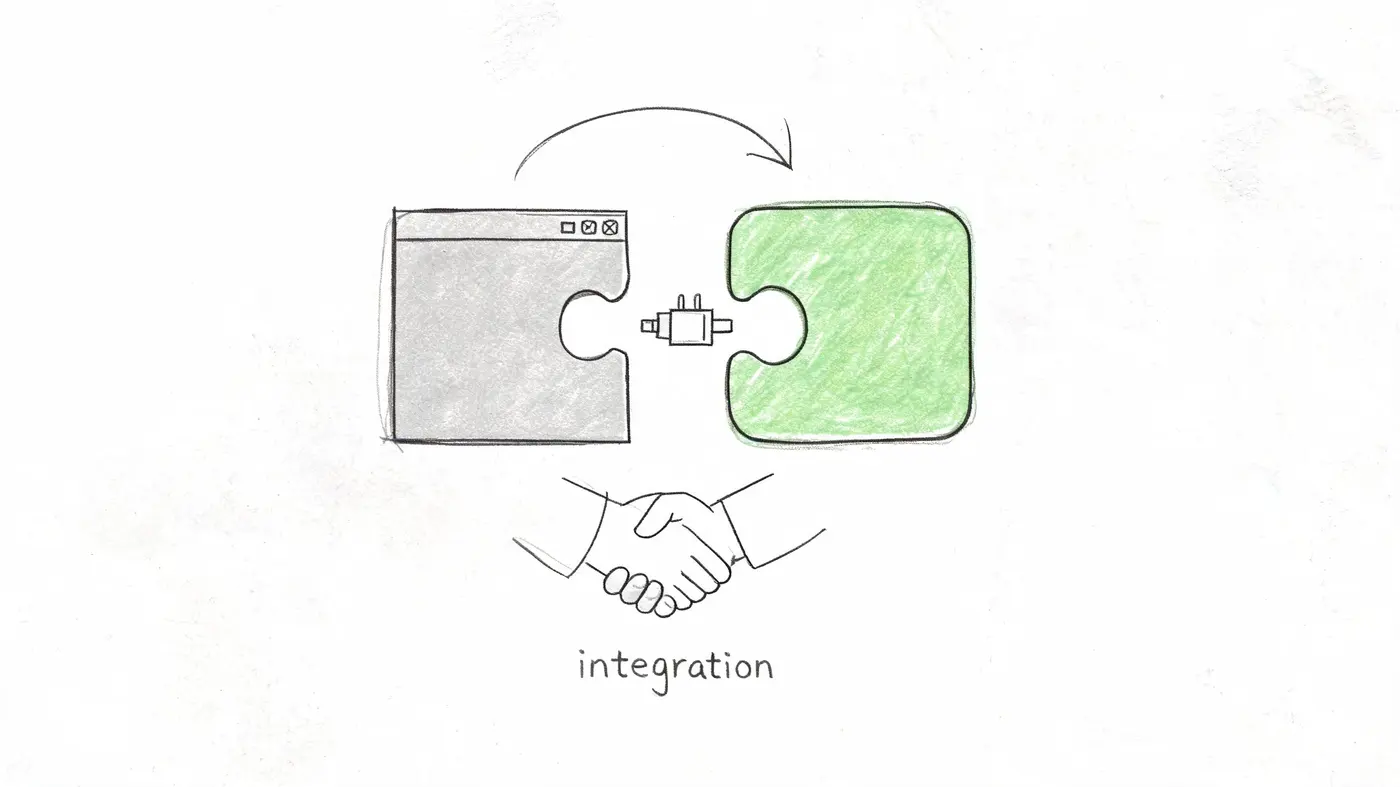
That is why partnership and integration launches can outperform louder launch tactics. They reduce adoption risk at the exact moment buyers are deciding whether to try, install, or buy. Zapier gained traction by connecting to tools teams already depended on. Stripe removed friction by fitting into merchant workflows instead of asking merchants to rebuild them. The same pattern shows up across SaaS and e-commerce. Products that fit the existing stack are easier to justify internally and faster to activate.
Choose partners that reduce launch friction
The best launch partnerships start with buyer trust, not logo collecting. Pick the few platforms, agencies, or ecosystems that buyers already use to run the workflow your product improves. For many launches, that means Shopify, WooCommerce, WordPress, Webflow, Google Tag Manager, or a documented JavaScript implementation path.
Productboard's product launch strategy guide notes that teams should align launch planning to the full customer journey, including adoption barriers after sign-up. For integration-led launches, that means treating implementation as part of the launch offer. If setup is slow, confusing, or unsupported, demand generation gets wasted.
How to execute the launch
Use the same operating framework for each integration or partner motion so the launch is measurable, not anecdotal.
- Build integration-specific landing pages: Each page should show the exact workflow, setup steps, screenshots, and expected outcome for that platform.
- Create a shared launch kit for partners: Include email copy, webinar talking points, product screenshots, customer FAQs, and a short enablement script for partner sales or success teams.
- Prepare support before announcement day: Installation questions arrive immediately. Document common failure points, assign escalation owners, and publish setup guidance that removes avoidable tickets.
- Instrument the install path: Track page visit, install start, install completion, first key action, and time to first value by integration.
- Tighten conversion paths: Strong partner traffic still fails if the page and onboarding flow are weak. This guide on improving website conversion rates for trial and install flows is useful if your launch depends on turning interest into successful setup.
For SaaS, the core trade-off is speed versus coverage. Launching with two well-supported integrations usually beats announcing eight weak ones that create support debt. For e-commerce apps, the trade-off is similar. A polished Shopify launch page and onboarding flow often produces more installs than broad compatibility messaging that leaves merchants unsure how the app works in their store.
KPIs and A/B tests for partnership-led launches
Measure the quality of the integration path, not just partner traffic volume.
Track:
- Partner-sourced visits
- Install starts by integration
- Install completion rate
- Activation rate by integration
- Time to first value
- Demo requests from partner pages
- Support tickets per installation path
- Revenue or pipeline influenced by partner-sourced accounts
A/B test:
- Page angle: "Works with Shopify" versus outcome-led messaging tied to a specific use case
- CTA copy: "Install now" versus "See how setup works"
- Proof format: integration screenshots versus customer workflow examples
- Setup presentation: short checklist on page versus linked documentation
- Partner page depth: one generic integrations page versus dedicated pages for each platform
One result shows up often. Buyers respond well when the launch proves compatibility, explains implementation clearly, and shows a credible path to value in their current environment. That is what makes partnership-led launches effective. They do not just create awareness. They lower the operational risk of adoption.
5. Free Trial / Freemium Model Launch Strategy
What gets a buyer to commit before budget, procurement, and internal debate slow the decision? A product experience that proves value fast.
Free trial and freemium launches work best when users can reach a clear first win on their own. Slack, Dropbox, Canva, and HubSpot all grew this way because they reduced friction at the point of entry and let the product make the case. For launch teams, the trade-off is straightforward. Lower friction usually increases signups, but it can also attract weak-fit accounts that never activate. The model only works if onboarding turns curiosity into real usage.
Structure the offer around first value
Set the free experience around one job the user wants done now. Give enough access for an individual or small team to complete that workflow, see the result, and understand what more capacity or collaboration would enable after an upgrade.
Weak free models fail in predictable ways. They either give away too much and delay conversion, or they restrict the product so heavily that users never reach value. A better setup defines three things clearly: what is included, what milestone signals success, and which limit pushes an upgrade at the right moment.
If self-serve acquisition is part of the launch plan, fix the conversion path before spending to drive traffic. Sign-up intent is often won or lost on the page, the form, and the first few onboarding steps. This guide on how to improve website conversion rates is a useful reference for tightening that path.
For SaaS, that might mean a 14-day trial with one guided use case, templated setup, and a clear team-sharing limit. For an e-commerce app, it could mean one live campaign or one store connection, with reporting visible enough to prove the outcome but advanced controls held for paid plans.
KPIs and A/B tests that show whether the model can scale
Sign-up volume is a weak launch metric on its own. Activation, conversion intent, and speed to value tell you whether the model is attracting the right users and moving them toward revenue.
Track:
- Activation rate: Percentage of new accounts that complete the key setup step and reach first value
- Time to first value: How long it takes a new user to complete the first meaningful workflow
- Free-to-paid conversion rate: Which cohorts upgrade, and after which usage threshold
- Upgrade trigger points: Limits or events that create healthy purchase pressure without frustrating good-fit users
- Sales velocity from trial accounts: How quickly product-qualified accounts move to purchase or demo
- Trial-to-support ratio: Whether friction in setup is creating support load that makes the model expensive to run
A/B test:
- Trial length: shorter trial versus longer trial for products with different setup complexity
- Onboarding sequence: product-led checklist versus email-led education
- First action timing: create the first project during signup versus after account creation
- Plan design: one usable free workflow versus sandbox-only access
- Upgrade prompt: usage-based prompt versus outcome-based prompt tied to a completed milestone
One pattern shows up often in launch reviews. Free access drives growth when the path to value is obvious, the limits are sensible, and the upgrade feels like the next logical step. If users need too much explanation before they succeed, a free trial may still help, but it usually needs sales assistance or tighter onboarding to convert consistently.
6. Influencer & Industry Expert Partnership Strategy
Influencer partnerships are often misunderstood. In B2B and technical categories, you're rarely buying reach alone. You're borrowing context. A trusted CRO educator, e-commerce consultant, or growth operator can explain your product in a way your own brand often can't.
That's why this strategy works better with experts who teach than with personalities who post. In markets where the buyer needs reassurance, explanation is more valuable than noise.
What to ask experts to do
Don't ask for generic promotion. Ask for a format that helps buyers evaluate the product.
Useful collaborations include:
- Teardown sessions: An expert reviews the product from an operator's point of view.
- Workflow demos: They show how they'd use it on Shopify, Webflow, or a landing-page programme.
- Roundtables: A few practitioners discuss when the product is useful and when it isn't.
That last part matters. Balanced endorsements create more trust than polished hype.
Measurement and trade-offs
This channel can produce warm leads, but it can also produce attention that doesn't convert. That's why you need channel-level attribution. Track referred trials, demos, and customer quality by expert, not just clicks or views.
For launch testing, compare:
- expert-led webinar versus newsletter mention
- technical deep dive versus strategy discussion
- affiliate offer versus no incentive
Some products shouldn't use this strategy early. If the onboarding still confuses users, influencer traffic just magnifies the problem. In that case, fix activation first, then amplify.
7. Community Building & User-Generated Content Strategy
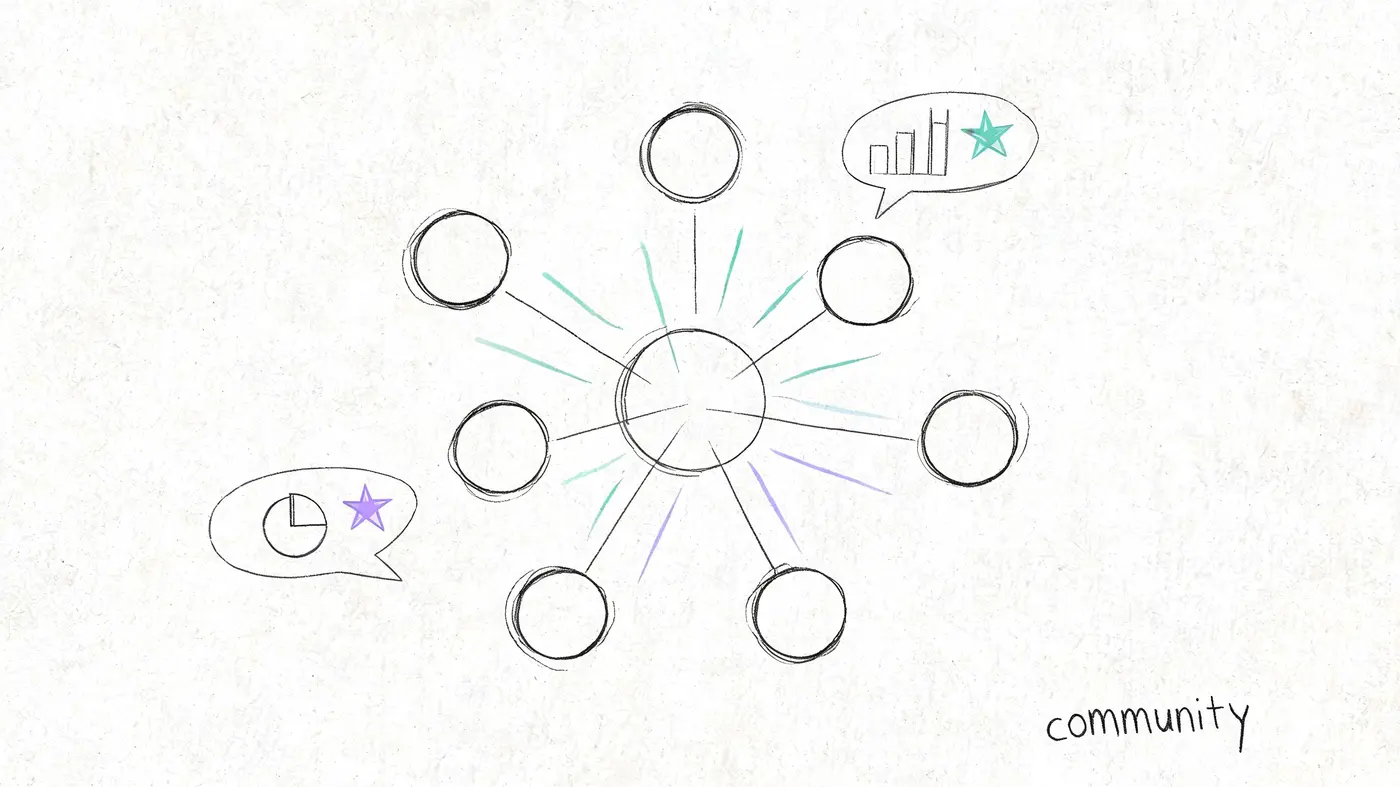
What happens when prospects can see real users discussing your product before your team ever gets on a call? Friction drops. Trust goes up. For complex products, that often matters more than another polished launch asset.
Community works best when the product improves through shared use. SaaS teams can turn customer questions into setup templates, benchmark discussions, and workflow examples. E-commerce brands can turn customer photos, reviews, and unboxings into proof that reduces hesitation at the point of purchase. In both cases, the goal is the same. Build a place where customers help the next customer understand how the product fits into real work or real buying decisions.
How to set it up without creating an empty forum
Start with a contained group. A private Slack, Discord, Circle community, or customer advisory group usually outperforms a public community at launch because density matters more than size. Twenty active users in one role-specific space will teach you more than two hundred passive signups.
Give the group a job. Ask beta users to post first-use wins, failed setups, templates, before-and-after results, or product questions you can answer in public. If the only reason to join is support, the space becomes a ticket queue. If members get recognition, early access, and practical help from peers, participation holds.
Structure matters. Separate channels by use case, role, or maturity level so conversations stay useful. A RevOps lead, Shopify operator, and agency founder do not need the same examples or prompts.
Implementation framework
Use a simple four-part system for launch.
- Acquire the right members: Invite beta users, design partners, active customers, and newsletter subscribers who already engage with educational content.
- Activate participation: Seed the space with prompts, host weekly office hours, and ask new members to share their stack, goal, or first use case.
- Capture usable proof: Turn strong posts into case snippets, FAQ answers, testimonial requests, and landing page updates. A review of landing page optimization best practices is useful, because community language often converts better than internal copy.
- Redistribute winning content: Repost customer examples in launch emails, product pages, onboarding flows, and social clips. If you need fast creative variations from member quotes or video snippets, ShortGenius AI ad generator can help your team produce testable assets quickly.
KPIs, tests, and real trade-offs
Track more than member count. The useful launch KPIs are activation rate for community members versus non-members, referral signups, support deflection, review volume, user-generated content created per week, and retention by cohort. For e-commerce, watch conversion rate on pages that include customer photos or reviews. For SaaS, track whether community members reach first value faster.
Run controlled tests. Compare inviting users before activation versus after first value. Test a founder-led welcome thread against an automated onboarding sequence. Try prompting for templates and screenshots versus open-ended discussion. You are looking for the format that produces proof, not just chatter.
There is a trade-off here. Community-led launches save cash on paid distribution, but they take moderation time and product attention. If onboarding is still confusing, a community can turn into a public record of unresolved friction. Fix the first-use experience first, then ask users to talk about it publicly.
8. Paid Advertising & Demand Generation Launch Strategy
Can paid acquisition accelerate a launch? Yes, if the team has already narrowed the audience, sharpened the promise, and built a path from click to conversion. Paid channels amplify what is already working. They also expose weak positioning fast, which is why I treat them as a scaling tool first and a discovery tool second.
Channel choice should follow buyer intent. Search captures active demand. LinkedIn works when role, seniority, or account type matters. Retargeting keeps interested visitors in motion after they leave the site. For e-commerce, Meta and Google Shopping can create demand and convert it in the same campaign if the offer is clear and the product page removes friction.
Build the campaign before you buy traffic
Start with one core offer, one priority segment, and one conversion action. A SaaS team might send paid search traffic from "A/B testing software" terms to a demo page for product-led growth teams. An e-commerce brand launching a new skincare line might run creator-style social ads to a collection page segmented by skin concern, not a generic homepage.
The page has to match the ad. If the ad promises faster experiment setup, the landing page should prove faster setup in the headline, screenshots, and CTA. If your page cannot hold segmented traffic, fix that before raising budget. Use this guide to optimizing landing pages for conversion as a pre-launch check. Paid traffic makes weak pages expensive.
Creative volume matters here. Teams usually need more variations than they expect, especially in the first two weeks of launch. ShortGenius AI ad generator is useful when the team needs multiple testable ad variants without waiting on a full production cycle.
KPIs, tests, and real trade-offs
Paid launch campaigns fail when teams report platform metrics and ignore buying signals. Click-through rate can help diagnose creative fatigue. It does not tell you whether the launch is producing qualified pipeline or paid customers. Track cost per qualified signup, activation rate by channel, trial-to-paid conversion, demo-to-opportunity rate, payback period, and channel-assisted revenue. For e-commerce, track new customer acquisition cost, product page conversion rate, average order value, and first-purchase to repeat-purchase movement.
Run controlled tests that isolate one variable at a time:
- Audience split: category-aware buyers versus problem-aware buyers
- Offer test: free trial versus demo request versus waitlist with incentive
- Message angle: speed, ease of setup, integration fit, lower risk, or revenue impact
- Page structure: single CTA page versus comparison page versus use-case page
- Creative format: static image versus founder video versus customer proof clip
The trade-off is straightforward. Paid demand generation gives speed, control, and measurable reach. It also burns budget quickly when the message is still fuzzy or the post-click experience is weak. Early in a launch, I would rather spend less on traffic and more on message-page fit. Once one segment converts cleanly, then increase spend with confidence.
9. Direct Sales & Outbound Launch Strategy
What if the fastest way to validate a launch is to ask the right buyers to react to it directly?
Direct sales and outbound work best when the product carries a meaningful contract value, needs explanation, or solves a problem that buyers will not search for on their own. In those cases, waiting for inbound interest slows learning. A targeted outbound motion gives the team direct access to objections, buying criteria, and deal friction early enough to improve the launch while it is still taking shape.
Slack and Stripe both benefited from focused early account outreach. The lesson is practical. A small group of well-chosen design partners or flagship customers can shape positioning, onboarding, proof points, and case studies faster than a broad awareness push.
Build around account quality and stakeholder relevance
Start with a narrow account list. Pick companies where the pain is visible, expensive, and active right now. For experimentation software, that might be high-traffic e-commerce brands with frequent site releases, agencies running conversion programs across multiple clients, or SaaS teams with a mature growth function and clear activation goals.
Then tailor the message by role. Growth leaders usually respond to speed, pipeline impact, and experiment throughput. Product teams care about adoption, prioritization, and decision clarity. Technical buyers focus on implementation effort, security review, and integration fit.
This channel is useful because it pressure-tests the value proposition under real buying conditions. Prospects ask the questions that matter. Why now? Why this over the current workflow? What has to be true for this to pay for itself? Those conversations expose weak messaging faster than launch traffic ever will.
If the outreach is part of a coordinated announcement, a short product launch press release template can also help the sales team keep the company narrative consistent across emails, decks, and follow-up materials.
KPIs, tests, and real trade-offs
Measure buying signal quality, not just activity volume. Track positive reply rate, meeting booked rate, meeting-to-opportunity rate, objection patterns by persona, sales cycle length, and pilot-to-paid conversion. For e-commerce tech or retail SaaS, also track how often prospects mention merchandising speed, checkout risk, or revenue attribution during calls. Those details often become stronger launch copy.
Useful tests include:
- Offer structure: demo-first versus audit-first versus pilot invitation
- Message angle: revenue lift versus implementation simplicity versus lower rollout risk
- Segmentation: one vertical sequence for agencies, another for in-house SaaS teams
- Persona entry point: start with growth leadership versus product or engineering
- Proof asset: customer story versus ROI calculator versus integration checklist
The trade-off is clear. Outbound gives precision, direct feedback, and a path to early revenue. It also costs team time, requires strong sales execution, and breaks down quickly if account selection is sloppy or the message is still generic. For launch-stage teams, that trade can be worth it when a handful of strong early customers will do more for momentum than a large top-of-funnel spike.
10. Launch Event, Webinar & PR Strategy
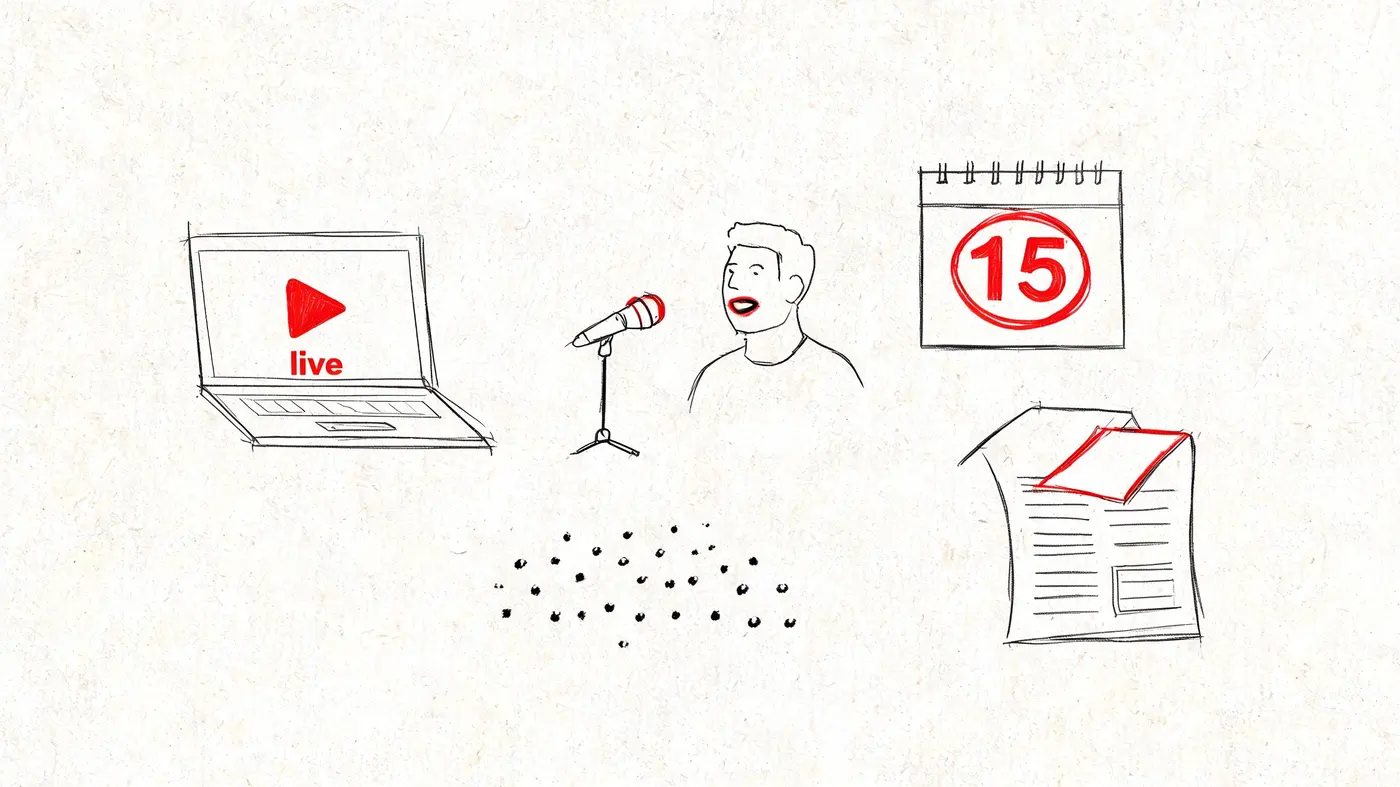
A launch event gives the market a focal point. A webinar gives buyers a reason to pay attention long enough to understand the product. PR can extend that moment beyond your owned audience. Used together, they create concentration. That's the advantage.
Figma's conferences, Webflow's event-led storytelling, and founder-led launches from companies like Notion all show the same principle: the announcement works better when it feels like a moment, not a status update.
Run the event like a conversion asset
The strongest launch webinars don't just “introduce the product”. They solve a live problem. A session on reducing experiment setup friction or improving activation will usually outperform a generic feature tour.
Bring in outside voices when possible. A customer can ground the discussion. A partner can expand reach. An expert can add credibility. Then turn the recording into clips, follow-up emails, landing page assets, and sales collateral.
If you need help shaping the announcement itself, a product launch press release template can speed up the PR side without forcing corporate jargon into the story.
What to measure after the event
Watch registration quality, attendance quality, follow-up response, demo requests, and whether event attendees activate at a higher rate than other lead sources. Event-led launches are valuable because they create reusable assets, not just a one-hour spike.
A webinar should answer the buyer's hardest practical question, not just the marketer's favourite talking point.
A/B test the title, agenda framing, speaker lineup, and CTA. For SaaS, “how to achieve outcome X” often beats “introducing product Y”. Buyers care about the workflow first.
10-Point Product Launch Strategy Comparison
| Strategy | 🔄 Implementation Complexity | Resource Requirements | ⭐ Expected Effectiveness | 📊 Expected Outcomes | 💡 Ideal Use Cases & Key Advantages |
|---|---|---|---|---|---|
| Soft Launch / Beta Testing Strategy | Medium, targeted rollout, monitoring, iterations | Dev effort (SDK), analytics, support for beta cohorts | ⭐⭐⭐⭐ | Validated metrics, early bug discovery, improved UX | 💡 Best for validating SDK performance and uptime before enterprise scale; reduces launch risk |
| Product Hunt / Launch Platform Strategy | Low–Medium, preparation + high-day engagement | Marketing content, demo video, community coordination | ⭐⭐⭐ | Quick visibility, backlinks, targeted early-adopter traffic | 💡 Good for rapid exposure to growth marketers; emphasise key differentiators (9KB SDK) |
| Content Marketing & Thought Leadership Strategy | High, sustained content creation and SEO | Content team, SEO expertise, research time | ⭐⭐⭐⭐ | Long-term organic traffic, authority, lead gen assets | 💡 Ideal for building trust and educating CRO audience; supports funnel stages over time |
| Strategic Partnership & Integration Launch Strategy | High, technical integrations + partner negotiations | Engineering, partner ops, co-marketing resources | ⭐⭐⭐⭐ | Faster adoption via marketplaces, higher credibility | 💡 Ideal for e‑commerce focus (Shopify/WooCommerce); lowers adoption friction |
| Free Trial / Freemium Model Launch Strategy | Medium, product gating and onboarding flows | Product, support, billing, onboarding resources | ⭐⭐⭐⭐ | Large user pool, trial-to-paid conversions, usage data | 💡 Effective to demonstrate product value; track free→paid conversion closely |
| Influencer & Industry Expert Partnership Strategy | Medium, research + relationship mgmt | Outreach, compensation/affiliates, content coordination | ⭐⭐⭐ | Authentic endorsements, audience amplification | 💡 Use for credibility and niche reach; give early/exclusive access for authenticity |
| Community Building & User-Generated Content Strategy | High, ongoing community management | Community manager, events, content amplification | ⭐⭐⭐⭐ | UGC, referrals, product feedback, increased retention | 💡 Builds network effects and advocacy; requires consistent engagement |
| Paid Advertising & Demand Generation Launch Strategy | Medium–High, campaign setup and optimisation | Ad spend budget, creatives, landing pages, analytics | ⭐⭐⭐ | Immediate traffic, measurable leads, scalable when CAC is healthy | 💡 Best for time-bound visibility; test messaging and landing pages rapidly ⚡ |
| Direct Sales & Outbound Launch Strategy | High, hiring and scaling sales operations | Sales team, outreach tools, custom demos, SDR support | ⭐⭐⭐⭐ | Fast enterprise sign-ups, high-value accounts, case studies | 💡 Effective for landing flagship customers; resource-intensive but high-fit returns |
| Launch Event, Webinar & PR Strategy | Medium–High, production and PR coordination | Event production, PR agency/time, speakers, promo | ⭐⭐⭐ | Concentrated engagement, press coverage, reusable assets | 💡 Good focal point for announcements and demos; pair with recorded content for longevity |
From Strategy to Sustained Growth
What turns a launch into real growth instead of a short spike in attention?
The answer is usually sequencing. Strong teams stack motions in the right order. They use a soft launch to fix onboarding friction, publish content to frame the problem before demand peaks, add partnerships where distribution or trust matters, and bring paid acquisition in once the message converts. Each strategy in this guide works best as part of a system, not as an isolated campaign.
The practical decision is choosing the primary growth motion first. A product that needs education and proof usually performs better with content, community, or expert support than with broad paid spend. A product in an established category can often get traction faster through search demand, launch platforms, and retargeting. Complex, high-ACV products usually need direct sales, partner distribution, or both.
Every choice carries a cost.
Soft launches lower the odds of a public miss, but they slow reach. Paid campaigns create volume quickly, but they expose weak positioning fast and waste budget if activation is poor. Free trials widen the top of the funnel, but they can also bury the team in low-fit signups. Partnerships add credibility and access, but they take enablement, shared incentives, and operational follow-through.
That is why the framework behind these 10 strategies matters more than the channel list itself. For each one, the job is the same. Define the implementation steps, pick the KPI that signals real progress, run focused A/B tests, and tailor execution to your model. In SaaS, that usually means tracking activation, trial-to-paid conversion, and expansion signals. In e-commerce, it usually means watching conversion rate, average order value, repeat purchase rate, and creative performance by audience segment.
Measurement needs to sit inside the launch process from day one. Teams should know which promise gets qualified clicks, which onboarding path gets users to value fastest, which channel brings customers that retain, and which post-launch changes improve conversion. Without that discipline, launch reporting drifts toward vanity metrics.
The post-launch period is where good strategy proves itself. Winning teams review launch data weekly, cut channels that brought attention without adoption, and put more budget behind the paths that produced activation and revenue. They also feed what they learn back into the product, sales scripts, lifecycle messaging, and pricing tests. That loop is what turns one launch into a repeatable go-to-market capability.
If you are building your own playbook, start narrower than you think. Pick one primary channel, one core message, and one activation goal. Then add supporting channels that strengthen the same buyer story instead of creating noise. If you want more ideas for building that momentum after day one, these strategies for SaaS product traction are a useful next read.
If you want to turn your launch into an ongoing optimisation engine, Otter A/B gives your team a fast way to test headlines, CTAs, layouts, and launch messaging without slowing the site down. Its lightweight setup, revenue-focused reporting, and quick significance detection make it a strong fit for marketers, product teams, agencies, and e-commerce brands that want every launch decision to be measurable.
Stop guessing
Ready to start testing?
Set up your first A/B test in under five minutes. No credit card required.
- 14-day free trial
- No credit card required
- Cancel anytime