7 Example Value Proposition Resources for 2026
Looking for an example value proposition? We analysed 7 top guides and templates from Shopify, HubSpot, and CXL to help you write and test your own.
Stop Copying Slogans. Start Building Value.
Everyone tells you to study Apple, Slack, or Airbnb when you need an example value proposition. That advice is incomplete. A slogan can be memorable and still fail to persuade. A homepage headline can sound polished and still leave buyers unconvinced. What converts is rarely a neat one-liner by itself. It’s the underlying argument: who the offer is for, what pain it removes, why it’s better than the alternatives, and what proof makes that believable.
That’s why the best resources on value propositions aren’t just galleries of famous brand lines. They’re the ones that help you build, stress-test, and refine your own message in context. Some are strong for first-draft thinking. Some are useful when you need templates your team can fill in. Some are better once you’re ready to validate a message with experiments rather than opinions.
This list takes that practitioner view. Instead of recycling surface-level inspiration, it focuses on resources you can use to write and test a value proposition that improves conversion, adoption, or revenue. If you're also tightening the strategic layer behind your copy, this guide to understanding brand messaging is a useful companion.
1. Otter A/B
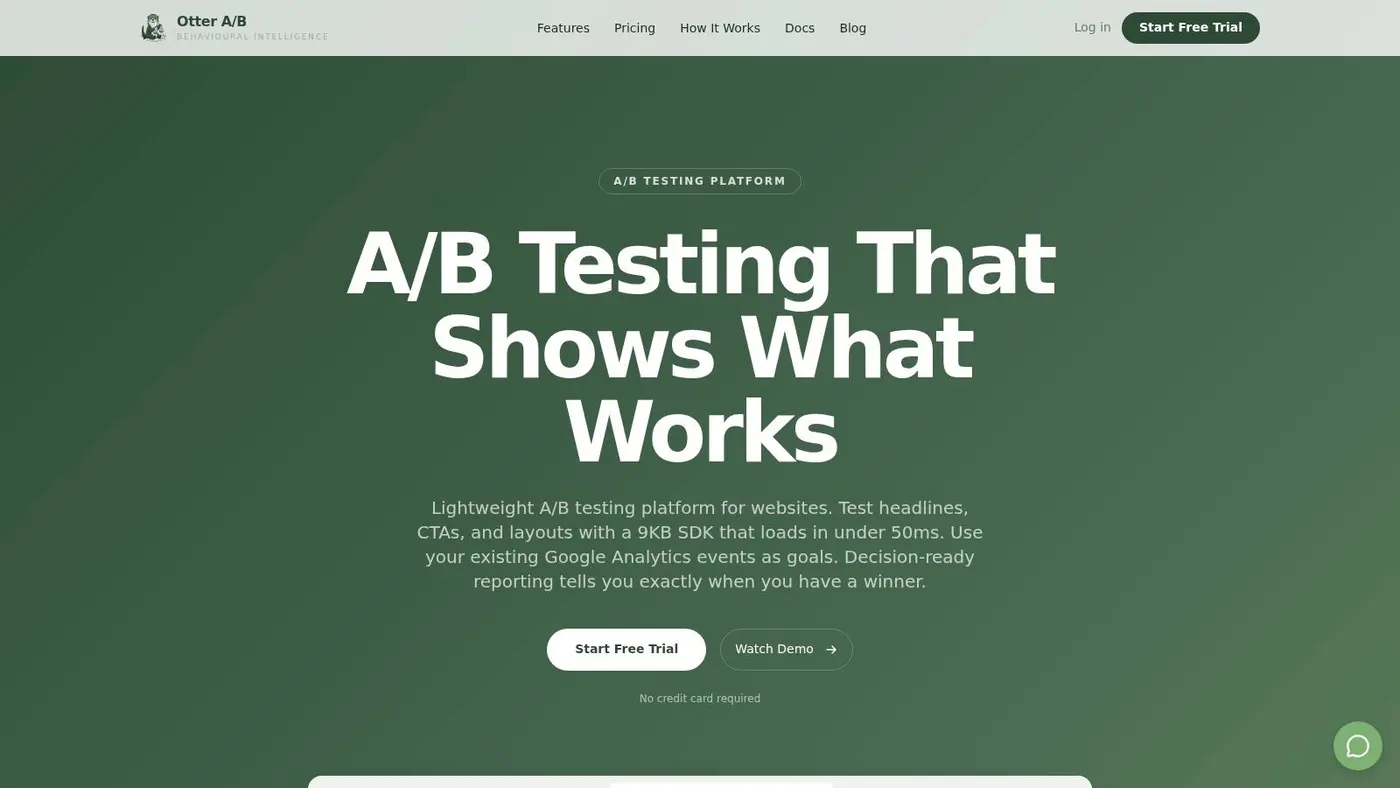
Otter A/B belongs at the top of this list for one reason. A value proposition is only useful once it survives contact with real traffic.
That makes Otter different from the guides that help you produce a first draft. Its value is in validation. Teams can test the claim, proof, CTA, and layout on live pages without turning a messaging question into a dev queue problem. For CRO work, that shift matters. It moves the conversation from preference to evidence.
A UK-based e-commerce test for a digital marketing agency’s landing page, built around MECLABS principles, pushed lead capture from 2.1% to 6.4%, a 201% increase after the value proposition was tightened with specific proof points and business-facing claims (MarketingExperiments). The practical lesson is simple. Specific claims usually outperform vague positioning when they line up with buyer intent and are presented with proof.
Why it’s the strongest validation resource here
Otter earns its place because it connects value proposition work to experimentation discipline. The platform is built for message testing on live websites, and its primary focus is website testing. That matters if page speed, implementation friction, and reporting quality affect whether your team runs tests or keeps debating copy in docs.
I like it most for teams that already have a draft and need to answer harder questions. Does a benefit-led headline beat a pain-led one? Does adding proof near the hero increase conversions or distract from the offer? Does a stronger CTA raise purchases but hurt average order value? Those are CRO questions, not brand workshop questions.
Practical rule: If the testing setup harms UX or delays launch, the message probably never gets a fair test.
Otter handles the parts that usually stall execution:
- Fast setup: A one-line install or Google Tag Manager deployment lets marketers launch homepage and landing page tests without waiting for a sprint.
- Business-level reporting: Teams can track purchases, average order value, revenue per variant, and trend data, so winners are judged on more than top-line conversion rate.
- Decision-ready stats: Frequentist z-test significance at a 95% threshold gives a clear basis for accepting or rejecting a messaging change.
- Easier stakeholder sharing: Slack alerts and password-protected reports make it easier to circulate results to clients, founders, or internal teams.
For teams that need a process before they need a platform, Otter’s guide to conversion rate optimization best practices is a useful companion. It helps frame what to test first, which is often the main bottleneck.
Where Otter fits, and where it doesn’t
Otter is strongest for web teams testing value propositions on live traffic. It fits Shopify and WooCommerce stores, SaaS sites built on Webflow or Next.js, and agencies running frequent copy and layout experiments across client accounts.
It is less suited to teams whose main requirement is server-side feature flagging or native mobile experimentation. If that is your use case, you need a different category of tool.
The bigger reason to use Otter in an article about example value propositions is strategic. Many resources teach drafting. Fewer help you verify whether the message increases revenue, lead quality, or adoption. Otter covers that last mile. If you also want options beyond web experiments, this roundup of best creative testing platforms is a good wider comparison.
2. Shopify
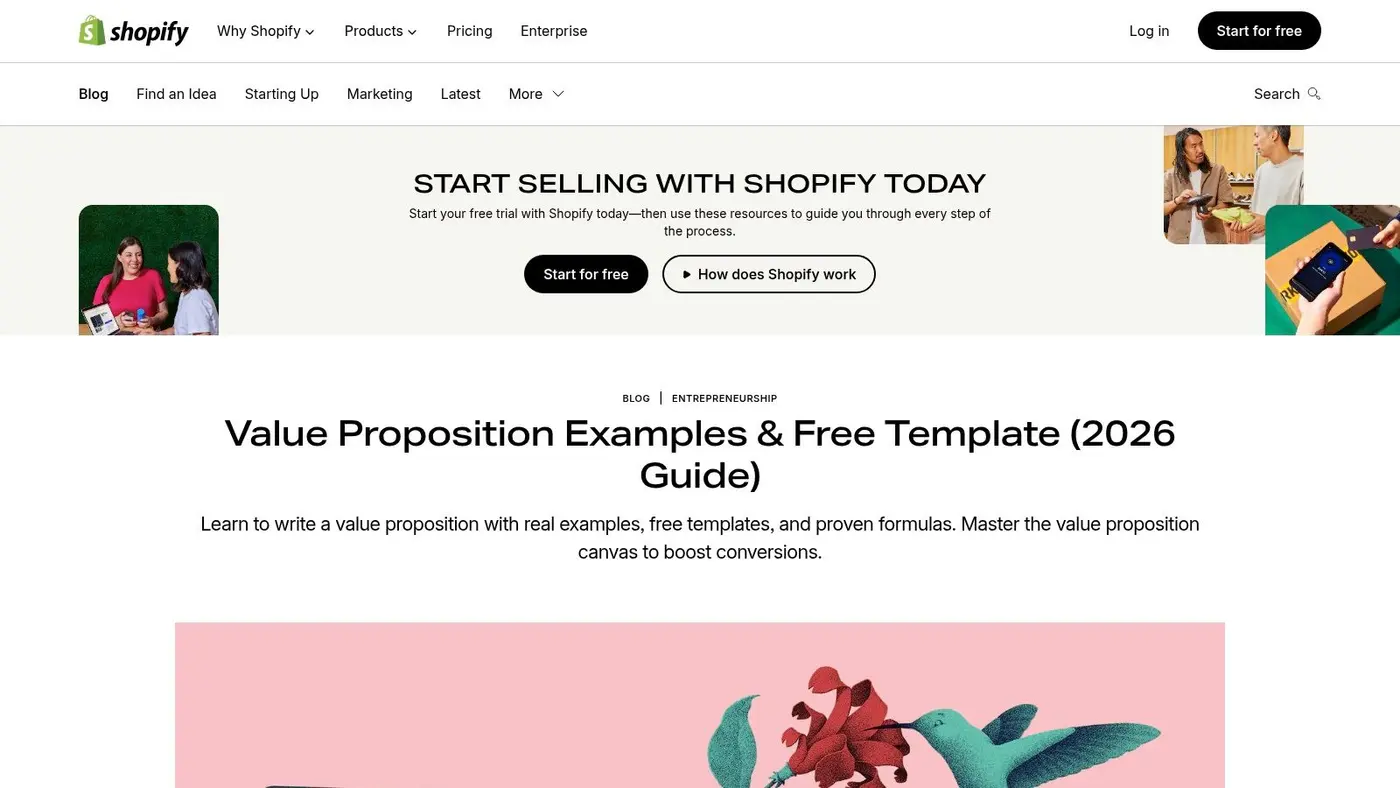
Shopify’s value proposition guide earns its place in this list for one reason. It gets teams from blank page to usable draft fast.
That sounds basic, but speed matters here. Early-stage stores and busy e-commerce teams rarely fail because they lack opinions. They fail because they have too many half-formed ones, spread across product notes, founder language, review snippets, and ad copy. Shopify gives that mess a container.
Best for fast drafting in e-commerce
Among the resources in this roundup, Shopify is the easiest one to use in a working session with a founder, marketer, or merchandiser. The examples are retail-heavy, the formulas are simple enough to use live, and the template forces a few choices that usually get blurred together: who the product is for, what problem it solves, what outcome matters, and why this option is different.
That last part is where weaker value proposition resources usually fall apart. They show polished brand lines. They do not help a team produce one under time pressure.
Shopify does.
Its strength is not originality. It is usability. If the job is to generate three homepage directions before the end of the day, this is a better resource than a theory-heavy framework. I use resources like this at the drafting stage because momentum beats elegance when the team is still trying to name the core offer clearly.
The trade-off is just as important. Shopify helps teams write. It does less to help them decide whether the draft is any good.
That gap matters once copy goes live. A cleaner headline can raise click-through rate while hurting revenue per visitor. A benefit-led promise can improve add-to-cart rate while bringing in lower-intent traffic. Teams need measurement discipline after the draft, especially if multiple page goals are in play. A practical way to frame that next step is to define how key website KPIs are measured before testing new messaging.
Where Shopify is strong, and where it runs out
What Shopify does well:
- Fast draft generation: Good for homepage workshops, product page rewrites, and founder-led positioning sessions.
- Retail relevance: The examples map well to DTC stores, subscription products, and catalog-driven sites.
- Useful templates: Teams can turn scattered research and customer language into first-pass copy quickly.
- Clear framing: The formulas separate audience, problem, benefit, and differentiation instead of mixing them into one vague sentence.
Where it is thinner:
- B2B and enterprise nuance: High-consideration buying journeys need more proof structure than Shopify covers.
- Research method: It will not teach customer interview synthesis, message mining, or prioritisation.
- Test design: It points teams toward validation, but not how to structure experiments or judge outcome quality.
That limitation does not reduce its value. It clarifies the job. Shopify is one of the better resources for producing a first version quickly, especially in e-commerce. In a meta-list of value proposition resources, that makes it useful for drafting, not for final judgment.
The practical workflow is straightforward. Use Shopify to produce options. Cut anything generic. Put the strongest two into a page test tied to a business metric that matters.
3. HubSpot
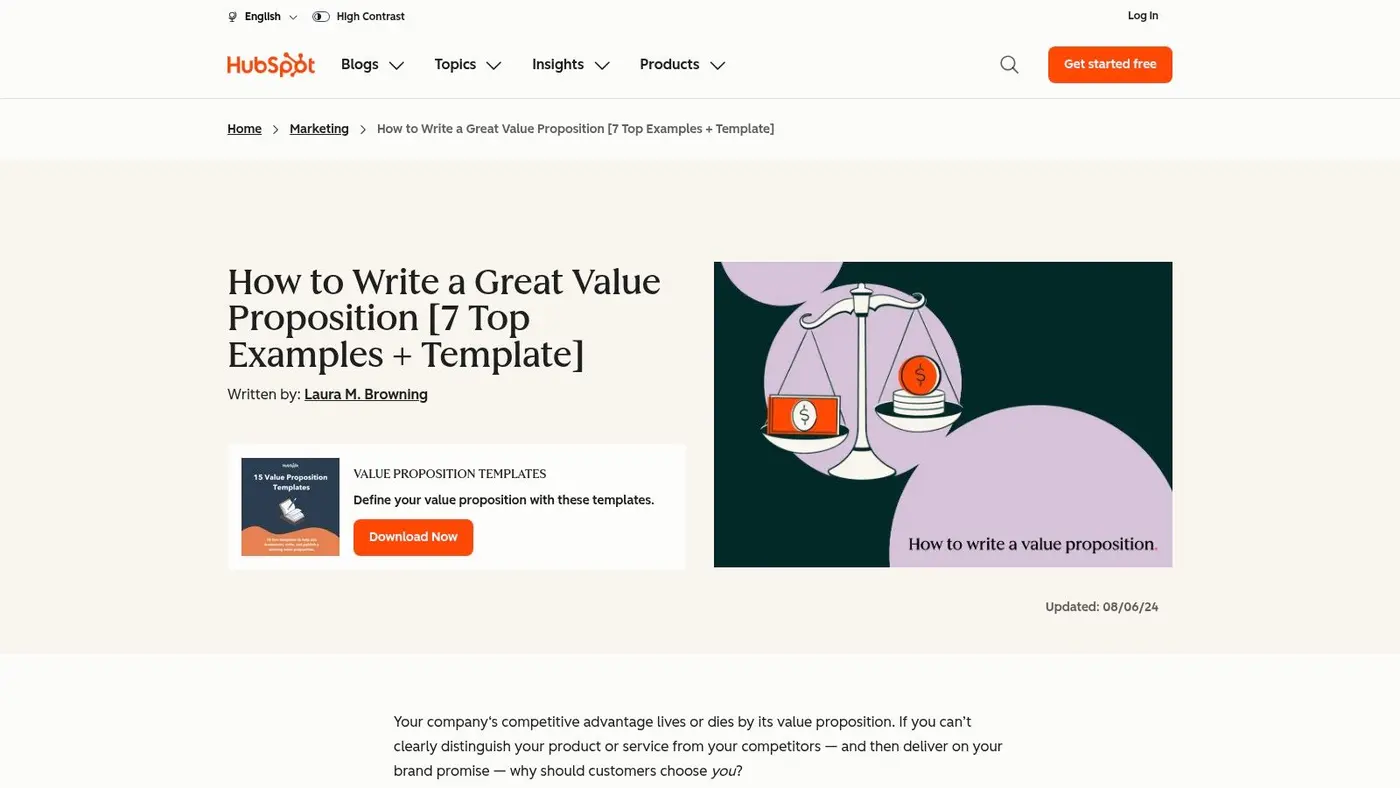
HubSpot’s guide is better than most roundup-style resources because it gives structure to the actual statement, not just admiration for polished brands. If Shopify helps teams get unstuck, HubSpot helps them tighten the message.
The value here is in decomposition. Headline. Subheadline. Supporting proof. That framing is useful because many teams treat the value proposition as one line, when in practice the conversion job is shared across the hero section.
Best for SaaS and B2B messaging teams
HubSpot suits product marketers, SaaS growth teams, and anyone writing for a buyer who needs more than a catchy phrase. The guide’s examples span SaaS, B2C, and marketplace businesses, but its utility lies in the worksheet logic. It pushes writers to say what the product is, who it’s for, and what proof supports the promise.
That’s where many draft value props collapse. The headline makes a claim, but the page doesn’t earn belief.
A London fashion retailer case study published at DataHunters Agency showed what happens when the message and proof line up. A Shopify homepage test moved conversion rate from 2.1% to 2.69%, raised average order value from £45 to £52, and increased monthly revenue from £12,500 to £18,200 after testing headline variants built around urgency, social proof, and personalisation. The winning message used social proof directly. That’s a useful reminder that proof isn’t a supporting detail. It can be the proposition.
What HubSpot gets right
- Headline discipline: It encourages tighter primary messaging.
- Subhead logic: Good for teams that need to expand the promise without rambling.
- Proof elements: Strong prompt for trust markers, outcomes, and differentiation.
- Cross-category examples: Helpful when your business sits between SaaS, marketplace, and service models.
Its trade-off is that some templates may be gated, and some examples still lean a bit slogan-heavy. You’ll still need to do the harder work of adapting the framework to an actual page, flow, or funnel.
If your team debates “success” without defining it, tie the value proposition to hard outcomes early. This primer on how KPIs are measured is a useful bridge between messaging work and performance accountability.
4. CXL
CXL’s value proposition resource is the most CRO-native entry on this list. It doesn’t flatter weak copy. It treats messaging as a hypothesis built from research and sharpened through testing.
That alone makes it more useful than most “example value proposition” articles.
Best for teams doing real research
CXL is strongest when you already know that homepage copy shouldn’t be invented in a vacuum. It pushes teams toward voice-of-customer work, differentiation analysis, and jobs-to-be-done inputs before they start polishing lines.
That’s the right order. Good value propositions usually sound simple at the end because someone did difficult research upfront.
A Webflow landing page for a UK fintech startup, documented in a CMI Research case study, used Otter A/B to test CTA layouts and microcopy. Trial sign-ups moved from 1.8% to 2.56%, and revenue per session rose from £0.15 to £0.28. The winning variation didn’t just “sound better.” It aligned message, placement, and offer mechanics around lower-friction trial intent. That’s the CXL mindset in practice. Message quality is inseparable from context.
Good CRO teams don’t ask, “Which line do we like?” They ask, “Which buyer anxiety are we reducing?”
Why CXL earns a place in the stack
Use CXL when you need to answer questions like these:
- What should feed the value proposition: Customer interviews, review mining, call transcripts, support logs.
- What makes a claim credible: Specificity, proof, differentiation, and relevance.
- What to test first: Not twenty variants at once, but the highest-friction uncertainty on the page.
- What weak value props sound like: Generic promises, category clichés, and unearned superlatives.
The downside is that CXL assumes some maturity. A small team with no research habit may find the approach heavier than a plug-and-play template. That’s not a flaw in the resource. It’s the cost of taking messaging seriously.
5. WordStream
WordStream is the fastest swipe file on this list. I wouldn’t use it as the only resource for strategy, but I would use it when a landing page team needs visual inspiration for above-the-fold structure.
Its utility is speed. Screenshots. Short notes. Clear examples of how value props sit next to CTAs and supporting elements.
Best for paid landing pages and quick critique
Paid traffic teams often have a practical problem, not a philosophical one. They need to know whether the page communicates the offer quickly enough after the ad click. WordStream is good at that layer. It helps teams assess clarity, benefit-first framing, and CTA proximity.
That’s especially relevant when testing tools and copy choices collide with page speed. A practitioner note from UK search and CRO commentary argues that heavyweight testing setups can create enough page bloat to hurt conversions, while lightweight alternatives avoid that trade-off (Jason Yormark). Even if you don’t adopt every claim in that argument, the framing is right: a value proposition isn’t only verbal. The way it’s delivered changes whether users experience it clearly.
The right way to use WordStream
Use WordStream as a visual diagnostic tool, not a strategic source of truth.
- For ad-to-page alignment: Check whether the hero repeats the core promise from the campaign.
- For hierarchy: See how quickly users can connect benefit, proof, and CTA.
- For copy trimming: Remove anything that delays understanding above the fold.
- For swipe-file building: Save patterns, not phrases.
Its age is the obvious limitation. Some examples may no longer match current brand pages, and the article won’t teach you much about research depth or experimentation logic. Still, it earns its place because it helps teams critique what’s visible on the page. That’s useful when deadlines are tight and the hero section still feels muddled.
6. Strategyzer
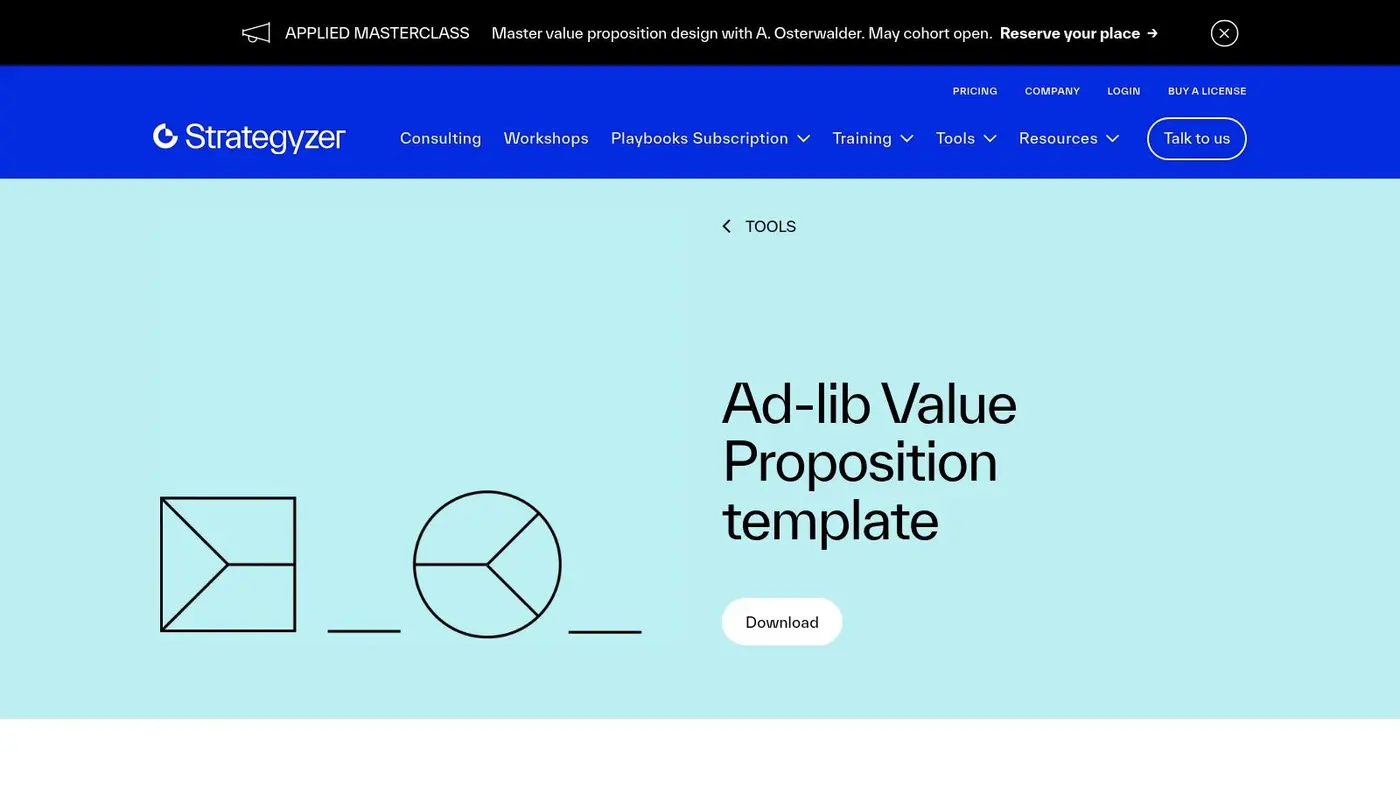
Strategyzer’s ad-lib template is the best resource here for structured brainstorming. Not copy polish. Not UX critique. Idea generation with discipline.
That distinction matters. Many teams jump to homepage wording before they’ve decided what kind of value they’re trying to foreground.
Best for early-stage positioning work
Strategyzer’s strength is that it makes multiple directions visible. Instead of debating one sentence for hours, teams can generate several candidate propositions built around different pains, gains, and jobs. That’s valuable because the first decent version is often not the strongest strategic angle.
The template works especially well in workshops. Product, marketing, sales, and customer research can each produce their own version, then compare assumptions. Done well, that exercise exposes mismatches fast. Sales may think the product wins on speed. Product may think it wins on capability. Customers may care most about reducing effort.
Operator’s note: If every team writes a different value proposition, you don’t have a copy problem. You have a positioning problem.
Why the framework still holds up
Strategyzer is a strong fit when you want to:
- Prototype multiple angles quickly: Cost savings, speed, trust, control, convenience.
- Anchor messaging in customer jobs: Useful for complex B2B and product-led offers.
- Create testable variants: Each ad-lib output can become a homepage or landing page hypothesis.
- Avoid slogan drift: The structure keeps teams tied to customer value, not internal jargon.
The downside is practical. The template works best if your team already understands the Canvas or JTBD language. Without that grounding, people can fill in the boxes mechanically and still produce weak messaging. The paid training and masterclasses can help, but not every team needs that level of support.
Used properly, Strategyzer gives you the raw material. It doesn’t replace testing or page-level refinement. It improves the quality of the first hypotheses you bring into those stages.
7. Mailchimp
Mailchimp’s UVP guide is the simplest resource in the set, and that simplicity is its advantage. I wouldn’t use it to run a serious messaging research project. I would use it when a team needs a clean audit lens for a rough draft.
Clarity, differentiation, relevance, credibility. Those four checks catch a surprising amount of bad copy.
Best for auditing drafts across channels
Mailchimp is useful when the value proposition has to travel. Homepage hero. Email header. Onboarding prompt. Paid social landing page. CRM nurture copy. Some resources help you invent a message. Mailchimp helps you keep it coherent as it moves through the funnel.
That’s why it’s a good fit for smaller marketing teams and lifecycle teams in particular. They often inherit a half-formed proposition and need a practical way to pressure-test it.
A compact checklist can expose common failures:
- Clarity: Can a new visitor understand the offer quickly?
- Differentiation: Does it say why this option is meaningfully distinct?
- Relevance: Is it tied to a real customer problem or desired outcome?
- Credibility: Is there enough proof to believe the claim?
Where Mailchimp helps most
Mailchimp’s examples are brief, but that’s not always a weakness. Brevity makes the framework portable. Teams can use it to review a draft in a content meeting, a campaign planning session, or a launch review without needing a long workshop.
Its limitation is depth. You won’t get detailed teardowns, advanced research guidance, or strong experimentation methodology. The examples can feel lightweight if you already work in CRO or product marketing.
Still, not every team needs a heavy framework every day. Sometimes the most useful resource is the one people will use before publishing a weak headline.
Top 7 Value Propositions Compared
| Tool | Implementation Complexity 🔄 | Resource Requirements ⚡ | Expected Outcomes 📊 | Ideal Use Cases | Key Advantages ⭐💡 |
|---|---|---|---|---|---|
| Otter A/B | Low, one-line install, quick setup | Minimal engineering; ultra-light 9KB SDK (fast) | Revenue-linked A/B results with significance alerts and reports | Website experimentation, CRO teams, rapid test cycles | Fast, low-friction testing; revenue-first analytics; broad integrations 💡Use for quick hypothesis validation |
| Shopify (article) | Very low, read & apply templates | Low, time for copywriting and adaptation | Concrete value-prop drafts and templates to test | DTC / ecommerce teams and agencies | Large set of current examples and plug‑and‑play formulas 💡Good starting point for product pages |
| HubSpot (guide) | Low, structured templates, worksheet format | Low–moderate, may require sign-up for assets | Clear headline/subhead + proof elements to increase trust | B2B / SaaS, CRO, product marketing | Actionable structure and prompts for landing pages ⭐Emphasizes credibility elements |
| CXL | Moderate, research-driven process | Moderate–high, needs VoC / JTBD data and analysis | Testable, research-backed value propositions with conversion focus | Teams with research bandwidth and optimization mandates | Practitioner tone linking copy to experimentation 💡Best for turning research into testable hypotheses |
| WordStream | Very low, quick swipe-file format | Low, fast scan of examples and screenshots | Immediate UX/copy adjustments for paid landing pages | PPC and paid social landing pages | Emphasis on clarity, CTA proximity, and message-match ⭐Fast to implement for ad funnels |
| Strategyzer | Moderate, uses Value Proposition Canvas | Moderate, requires Canvas familiarity and workshops | Strategically aligned value-prop variants for iterative testing | Product, strategy teams, enterprises doing JTBD work | Research-backed framework; encourages multiple hypotheses 💡Ideal when aligning product strategy and messaging |
| Mailchimp | Very low, checklist and examples | Low, quick audit and rewrite time | Simple UVP audits and copy improvements for campaigns | Small businesses, email/CRM marketers | Beginner-friendly checklist to validate clarity and credibility ⭐Great pre-launch copy audit tool |
From Insight to Impact Your Next Steps
The most popular advice about an example value proposition still gets one thing wrong. It encourages imitation over diagnosis. You’re shown polished homepage lines from famous brands, then left to reverse-engineer what made them work. That’s not enough for a team trying to improve sign-ups, lead quality, activation, or revenue.
The better path is to use different resources for different jobs.
Strategyzer is strong when the offer itself still needs shaping. It helps teams surface multiple strategic angles before they lock into one story. Shopify is better when you need a practical first draft now, especially in e-commerce. HubSpot helps tighten that draft into a clearer headline, subhead, and proof structure. CXL adds the research discipline teams often skip. WordStream sharpens page-level execution, especially for paid traffic and hero sections. Mailchimp gives smaller teams a simple audit filter they can apply across lifecycle touchpoints. Otter A/B is where the argument gets settled.
That’s the key distinction in this list. These resources help you write; Otter helps you verify. If a value proposition is a hypothesis about what buyers care about most, testing is the only reliable way to know whether the hypothesis holds up on a live page.
The mistake I see most often is treating the value proposition as finished once the team agrees on the wording. Internal agreement means very little; buyers decide whether the claim is clear, credible, and relevant. They do that through behaviour, not feedback in a meeting.
Start small. Pick one framework from this list. Draft two versions of your core proposition. Keep one focused on the primary outcome. Make the other sharper on proof, specificity, or differentiation. Then test them on a high-intent page.
A few practical rules help:
- Change one strategic variable at a time: Don’t rewrite the whole page if you only want to test the proposition.
- Tie the test to business outcomes: Leads are useful; revenue, activation, and order value are better when available.
- Preserve page performance: If the test setup harms UX, the result is harder to trust.
- Document what lost: Failed variants often teach more than modest winners.
That’s how value proposition work becomes a growth practice rather than a copy exercise. Not by collecting famous slogans, but by building a message, putting it in front of real users, and letting evidence decide.
If you want to move from value proposition theory to real conversion evidence, try Otter A/B. It gives you a lightweight way to test headlines, CTAs, proof blocks, and landing page variants without dragging down site speed, so you can find the message that drives revenue.
Stop guessing
Ready to start testing?
Set up your first A/B test in under five minutes. No credit card required.
- 14-day free trial
- No credit card required
- Cancel anytime