Master Client Engagement Strategies for 2026
Boost loyalty & revenue with client engagement strategies. Learn to test, measure, & optimise client interactions with actionable, data-driven examples.


A client opens two renewal decks. One shows deliverables shipped, meetings held, and tickets closed. The other shows that a pricing-page test lifted completed purchases, that onboarding friction dropped, and that the team can explain what changed. The second team usually keeps the account.
That gap defines client engagement more than responsiveness ever will. Clients stay when they can connect your work to revenue, lead quality, activation, or retention. Activity helps. Proof carries the relationship.
Strong client engagement strategies turn routine client interactions into a testing and decision-making system. Instead of filling updates with opinions, they give stakeholders a clear view of what was tested, what changed, what the result means, and what should happen next. For CRO teams, agencies, e-commerce operators, and product teams, that structure reduces friction at renewal time because value has been measured throughout the engagement, not argued at the end.
The practical challenge is execution. Good intentions do not create trust on their own. Teams need a repeatable way to choose test ideas, launch them quickly, measure commercial impact, and report results in language clients care about. That is where a platform such as Otter A/B helps. It gives teams a workable system for running experiments and sharing outcomes, whether the test is on a product page, lead form, onboarding flow, or pricing page. If your team needs a starting point, this guide to landing page split testing is a useful example of how to structure an experiment around a clear conversion goal.
The playbook below stays close to the work. Each strategy includes a concrete testing angle, implementation guidance, and a way to measure success with a modern A/B testing workflow. The trade-off is real. More testing discipline means more prioritisation, tighter instrumentation, and fewer vanity updates. In return, clients get clearer wins, cleaner reporting, and a stronger reason to keep investing.
1. Continuous A/B Testing and Experimentation
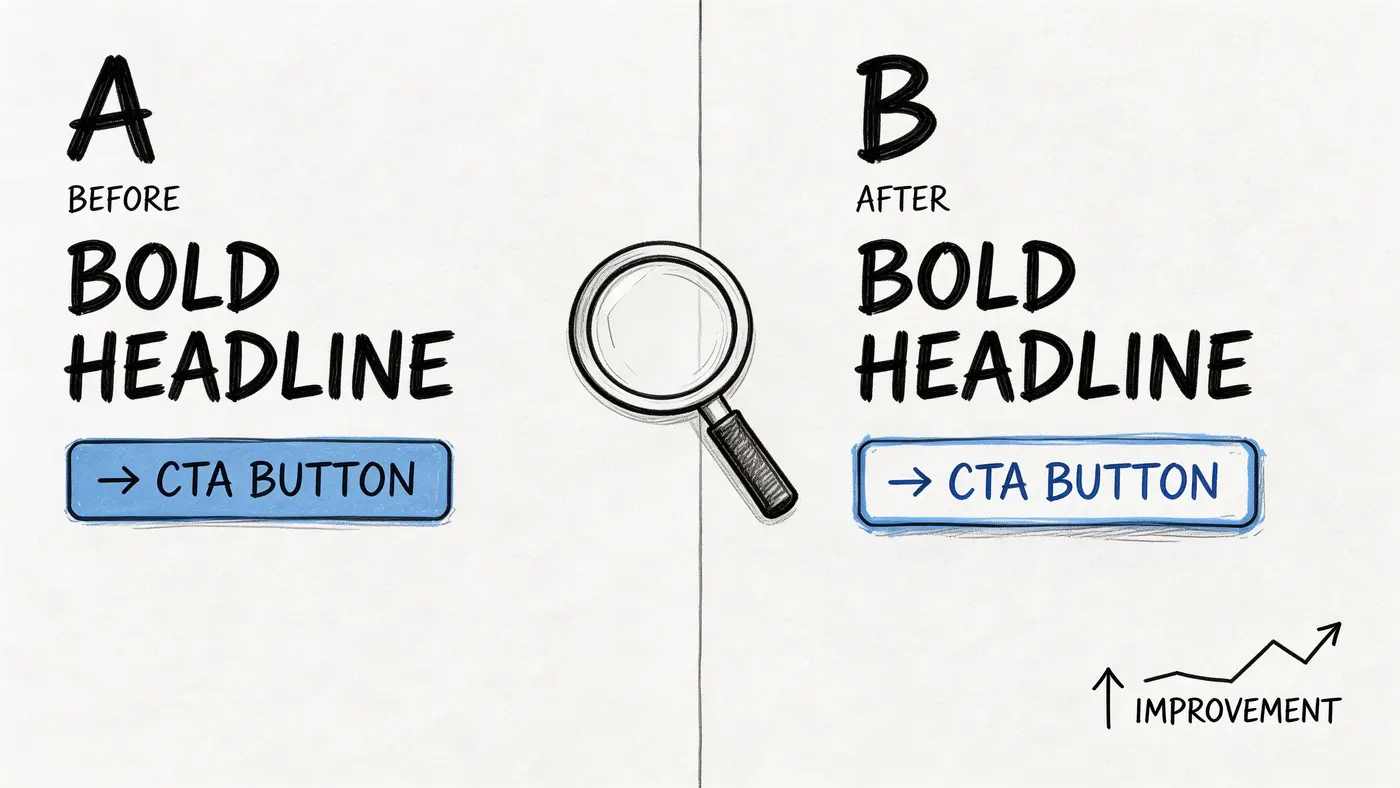
Teams lose momentum when testing happens as a one-off project. Clients notice that too. The relationship feels reactive instead of strategic.
Ongoing experimentation fixes that. You stop debating opinions and start comparing variants against purchases, leads, sign-ups, or revenue. In practice, this is one of the most reliable client engagement strategies because it creates a repeatable rhythm of improvement. There is always a live hypothesis, a next decision, and a fresh result to discuss.
For e-commerce, start on product pages, cart steps, and collection pages. For SaaS, begin with onboarding, pricing, and activation moments. For agencies, campaign landing pages are usually the fastest route to useful signal.
Where to start first
High-traffic pages should go first. They reach significance faster and reduce the chance that a client waits too long for a decision.
A simple sequence works well:
- Pick one commercial page: Choose a page tied to purchase intent, lead capture, or activation.
- Define one primary goal: Track purchases, submitted forms, or another hard outcome before the test starts.
- Change one major variable: Test the headline, CTA, layout, or trust section. Do not redesign everything at once.
If you want examples of clean setup and page-level test design, Otter’s guide to landing page split testing is a useful reference.
What to measure for clients
Conversion rate matters, but it is rarely enough on its own. Clients care more when you connect a variant to revenue per variant, average order value, or qualified conversions.
Otter A/B’s frequentist z-test engine works at a 95% confidence threshold, and that matters in client communication because you can explain why a winner is a winner without hand-waving. Add Slack notifications and the team can act quickly when a test reaches a decision point.
The strongest reporting line is usually not “we ran a test”; it is “we tested a business-critical page, reached significance, and now know which version should get more traffic”.
What does not work is random testing. Changing button colours on low-traffic pages might keep a dashboard busy, but it will not keep a client.
2. Personalised User Experience Optimisation
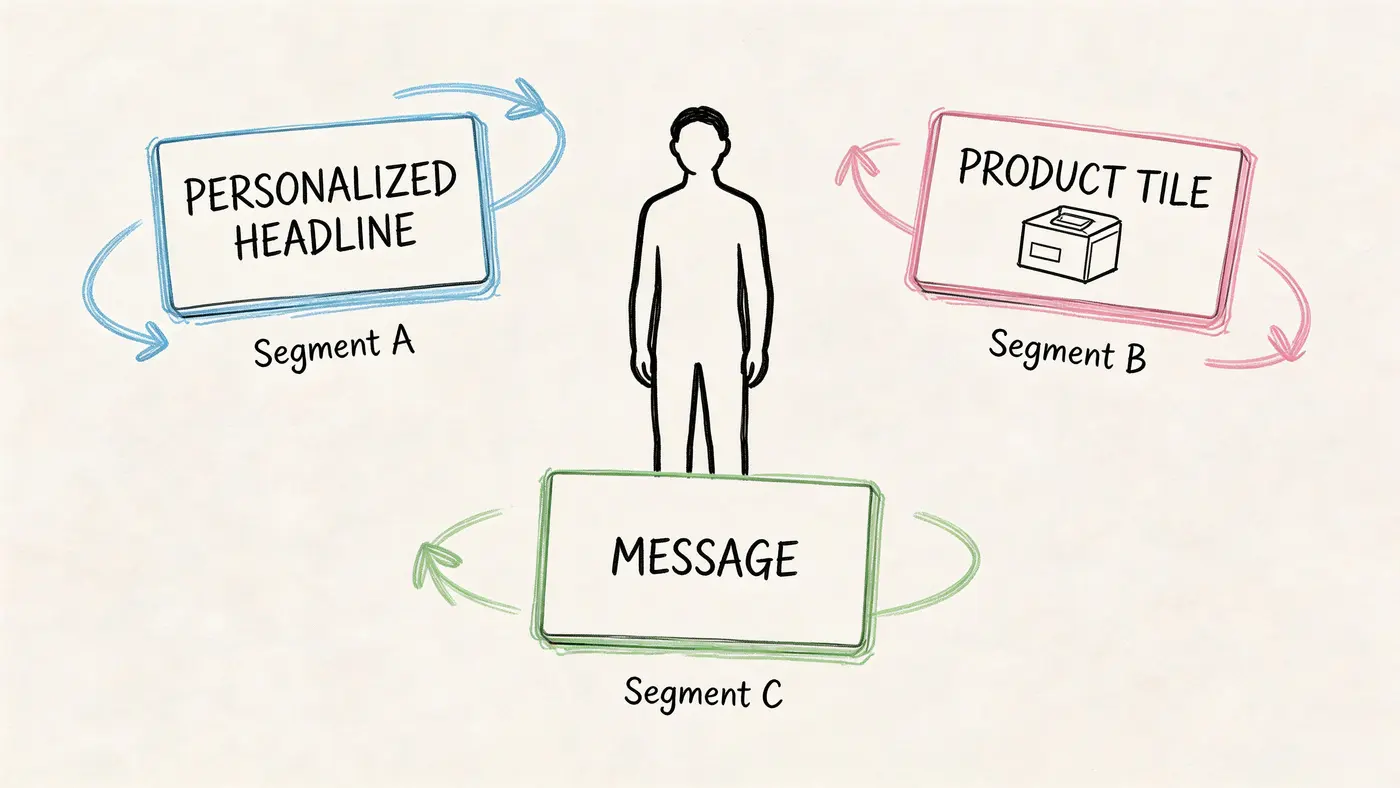
A client approves personalisation, the team adds dynamic blocks, and engagement barely moves. I see this a lot. The problem is usually not the idea of personalisation. It is vague segmentation, weak hypotheses, or success metrics that never tied back to revenue in the first place.
Personalisation works best when it solves a clear user difference. A first-time visitor often needs reassurance. A returning buyer often needs speed. A trial user may need proof of value, while an existing customer may need a faster route to the next action. Treating those groups the same usually leaves money on the table.
The practical starting point is simple segmentation that a client can understand and a team can test without weeks of setup.
Useful segments include:
- Traffic source: Paid search, email, affiliate, and direct users often respond to different intent cues.
- Lifecycle stage: New visitors, returning users, trial users, and customers need different prompts.
- Value or intent: High-intent category viewers, repeat purchasers, and heavy product users justify different offers or page modules.
For e-commerce teams, that might mean testing category page banners for first-time versus returning visitors. For agencies, it often means tailoring landing page proof points by region, audience, or acquisition channel. For product teams, it usually starts with onboarding paths split by plan type or activation stage.
Otter A/B is useful here because you can run audience-specific experiments instead of making personalisation a design opinion. Test one segment-specific change at a time, then compare lift by audience, not just sitewide averages. That keeps the conversation grounded in results.
What to test first
Start with changes that affect decision-making, not decoration.
Good early tests include:
- Message framing: Benefit-led copy versus proof-led copy for new versus returning visitors
- Trust signals: Reviews, client logos, or guarantees shown only to colder traffic segments
- Offer structure: Free shipping, demo CTA, or trial messaging adapted by source or lifecycle stage
- Onboarding flow: Shorter paths for high-intent users, more guidance for low-intent users
Otter’s guide to heat maps on websites helps when you need behavioural evidence before setting up these hypotheses.
Measurement needs discipline. If the client says they want better engagement, define what that means in operational terms before launch. Use a clear KPI framework for conversion rate, qualified actions, revenue per visitor, or activation rate, and align it to the segment being tested. Otter’s article on how KPIs are measured in experimentation is a solid reference for that setup.
One warning matters here. Segment-specific experiences should still feel like the same company. A paid social visitor can see a different headline from an email subscriber, but the offer, tone, and trust cues still need to match the wider brand experience.
The trade-off is complexity. Every new segment increases QA work, reporting overhead, and the risk of reading too much into small sample sizes. That is why I usually recommend starting with one high-value segment on one high-intent page, then expanding only after a clean win.
If the client already reviews performance across paid channels, PPC reporting for clients can help connect segment-level landing page tests to channel reporting. That makes personalisation easier to defend in monthly reviews because the experiment links back to acquisition costs and downstream value.
3. Data-Driven Storytelling and Reporting
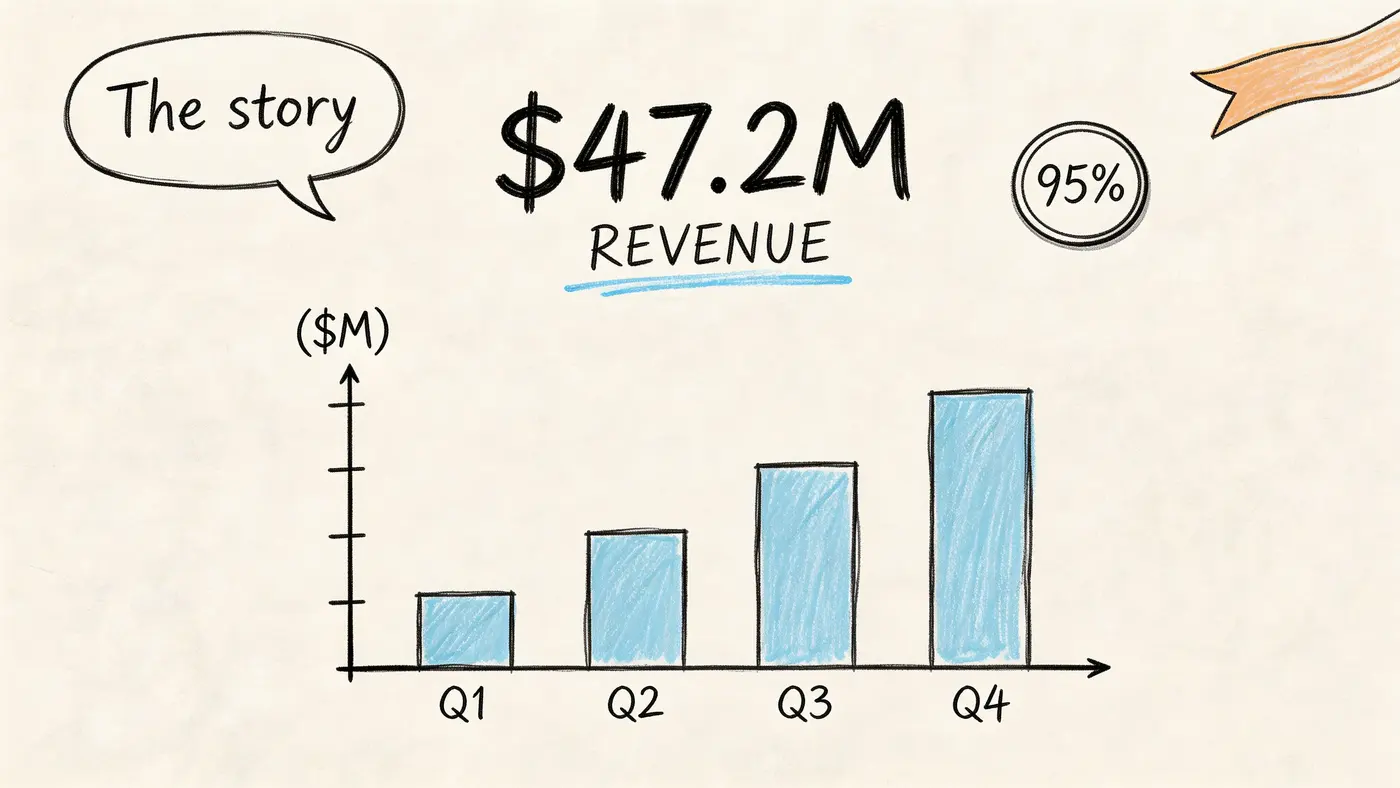
A raw test result is not yet a client story. “Variant B won” is technically useful, but it does not help a stakeholder understand why the test mattered, what changed next, and how it affects the business.
Good reporting closes that gap. It turns metrics into decisions.
Many teams assume the work speaks for itself, overlooking this aspect. It does not. Clients need interpretation, context, and a plain-English explanation of impact.
What to include in every report
Keep the structure tight:
- Business question: What problem was the test trying to solve?
- Hypothesis: What changed and why?
- Result: Which variant performed better at the required confidence threshold?
- Commercial implication: What should the client implement, keep testing, or deprioritise?
That format works well whether you are presenting to a founder, a marketing lead, or an e-commerce manager.
Otter A/B’s brandable reporting helps when agencies need a cleaner handoff to clients, especially if reports are shared across stakeholders. If you also manage paid traffic, examples from PPC reporting for clients are useful because they show how to present performance in a way executives can scan quickly.
Make the numbers understandable
If you report significance, explain it. If you report revenue, connect it to a page or user journey. If you report a loss, show what the team learned.
Otter’s guide on how KPIs are measured is useful here because KPI confusion often creates reporting bloat. Teams add too many metrics and obscure the true insight.
A practical rule is simple. Lead with the one metric the client already cares about. Then support it with no more than a few secondary metrics.
Clients rarely object to bad news when the reporting is honest, the method is clear, and the next action is obvious.
What fails is decorative reporting. Long decks, too many charts, vague commentary, and no decision.
4. Rapid Experimentation and Fail-Fast Culture
A client approves a six-week redesign. By the time the new page goes live, the original assumption is already stale, nobody can isolate what improved performance, and the team has spent too much budget to reverse course cleanly.
Rapid experimentation prevents that trap.
The goal is to test the smallest change that can answer a meaningful question. That usually means short cycles, narrow hypotheses, and clear kill criteria. Teams learn faster, clients see progress sooner, and weak ideas get rejected before they absorb design and engineering time.
In practice, I treat this as a throughput problem as much as a CRO problem. If a team can only ship one test every month, bad assumptions survive too long. If a team can launch one or two focused tests each week, the programme starts compounding. A hero message test can shape the offer strategy. A form-friction test can influence lead qualification. A checkout reassurance test can inform retention messaging later.
What fast testing looks like in different teams
The structure changes by business model, but the operating principle stays the same.
An e-commerce team might test promotional framing before touching pricing or page layout. An agency might test three value propositions before selling a full landing page redesign to the client. A product team might test onboarding copy, CTA order, or empty-state messaging before committing product resources to a larger UX rebuild.
Otter A/B is useful here because it lets teams queue and launch these smaller experiments without turning every test into a development project. That matters when the primary constraint is not ideas. It is speed, QA capacity, and stakeholder patience.
Use a simple testing framework
Fast experimentation only works when the team agrees on how decisions get made. A loose process creates activity, not learning.
Use this framework for every test:
- Question: What specific behaviour are we trying to influence?
- Hypothesis: What change should improve that behaviour, and why?
- Minimum version: What is the smallest viable test that can validate the idea?
- Decision rule: What result leads to rollout, iteration, or rejection?
- Next action: What does the team test immediately after the result comes in?
That last step is where many teams stall. They finish the test, report the result, and stop. A fail-fast culture only works if each result feeds the next experiment.
Example test ideas to run quickly
These are the kinds of experiments that move fast without being shallow:
- E-commerce: Test “free shipping” versus “fast delivery” as the primary product-page reassurance message
- Agency lead gen: Test proof-led hero copy versus outcome-led hero copy on a service landing page
- SaaS product team: Test shorter onboarding copy against task-based onboarding prompts
- Consulting firm: Test a shorter contact form against a form that pre-qualifies budget and urgency
- Subscription brand: Test cancellation language, trial framing, or billing-frequency presentation
None of these require a full strategy reset. Each one can produce a useful signal quickly.
Measure speed properly
Speed is not the win. Better decisions are the win.
Track a few operational metrics alongside conversion outcomes:
- time from idea to launch
- number of experiments shipped per month
- percentage of tests that produce a clear decision
- time between test completion and next deployment
- revenue, lead quality, or activation impact from implemented winners
Otter A/B helps here because teams can monitor experiment velocity and outcomes in one place instead of piecing the story together across decks, screenshots, and analytics tools. Clients usually respond well to that. They can see that the team is not testing randomly. They can see a system.
A fail-fast culture also has trade-offs. Small tests can miss interaction effects. Short cycles can tempt teams to chase easy copy wins while ignoring bigger UX issues. That is why I recommend balancing rapid tests with a smaller number of deeper experiments each quarter. Fast learning works best when it feeds a broader roadmap, not when it replaces one.
5. Integration-Based Workflow Optimisation
Testing programmes die when setup is clumsy. If the workflow adds too much engineering friction, too much QA time, or too much platform switching, the client engagement strategy falls apart before the first useful result.
That is why integration matters more than many teams admit. The best tool is often the one that fits the current stack with the least operational drag.
Match the testing method to the stack
A Shopify team usually needs a different implementation path from a Next.js product team. A WordPress marketer may prefer Google Tag Manager. A front-end developer may want custom JavaScript control.
Otter A/B supports common stacks including Shopify, WordPress, Webflow, Wix, WooCommerce, ClickFunnels, Squarespace, Framer, Next.js, Google Tag Manager, and custom JavaScript. That flexibility is useful because clients rarely want to change platforms just to start experimenting.
There is also a performance angle. Otter A/B’s SDK is 9KB, loads in under 50ms, and runs with zero flicker and 99.9% uptime. For teams worried about UX degradation or Core Web Vitals, those implementation details matter.
Where integration improves engagement
The main benefit is not technical elegance. It is adoption.
When testing fits the existing workflow:
- marketers can launch faster
- designers can review variants in familiar environments
- developers spend less time on repetitive support
- clients see value sooner
For engineering-heavy teams, this can also reduce the tension between experimentation and site stability. If tests run cleanly and do not create visual flicker, stakeholders become much more comfortable approving future experiments.
A practical trade-off is worth stating. The easiest setup is not always the most flexible one. GTM can be quick, but custom JavaScript may be better for complex logic or product-specific conditions. Good client engagement strategies account for that trade-off early instead of discovering it halfway through implementation.
6. Client Enablement and Self-Service Testing
A client logs in on Tuesday morning, sees a drop in form completions, and wants to test a CTA change before the weekly pipeline meeting. If they need to wait two days for agency support, momentum dies. If they can launch a safe, pre-approved test themselves, engagement usually goes up because the programme feels useful in real working conditions.
That is the point of self-service testing. It gives clients enough control to act quickly without turning the programme into unreviewed experimentation.
The strongest setups start small. Train clients on three or four repeatable actions they will use: launch a CTA test, duplicate a variant, QA targeting rules, and read a result report correctly. That beats a 40-slide training deck every time because it creates early wins and reduces hesitation.
I usually treat enablement as a permission system, not a free-for-all.
A practical self-service model includes:
- One testing playbook: Clear rules for prioritisation, guardrails, approval thresholds, and metrics that matter.
- A short template library: Reusable tests for headlines, CTA copy, landing page sections, pricing blocks, or onboarding prompts.
- Defined access levels: Clients can edit low-risk tests. Specialists keep control of audience rules, tracking setup, and experiment design for higher-stakes pages.
- Fast support during rollout: Office hours, Slack support, or loom walkthroughs so questions do not block adoption.
Otter A/B fits this model well because clients can launch straightforward experiments and review password-protected reports without pulling a strategist into every routine task. That matters for agencies trying to protect margin, e-commerce teams that need same-day changes, and product teams that want PMs or marketers involved without giving away full implementation control.
The testing framework should be concrete. For e-commerce, give the client self-serve ownership of low-risk merchandising tests such as badge copy, shipping-message placement, or add-to-cart CTA wording. Measure click-through to cart, add-to-cart rate, and revenue per session. For agencies, let account teams run approved lead-form or CTA tests on campaign pages while strategy leads review targeting and success criteria. Measure qualified lead rate, sales-call booking rate, and experiment velocity. For product teams, assign self-service tests to onboarding prompts, help text, or activation nudges. Measure activation rate, completion rate, and downstream retention-linked actions.
There is a trade-off. More client access increases speed, but it also increases the chance of weak hypotheses, overlapping tests, or bad metric choices. Shared ownership works better. Clients handle simple execution. Specialists keep the roadmap aligned with business outcomes, approve riskier experiments, and stop teams from declaring victory on noisy data.
Enablement works when the client can act independently on routine tasks and still rely on expert judgement for the decisions that affect revenue, lead quality, or product adoption.
7. Revenue-Focused Conversion Optimisation
A client approves a winning test on conversion rate, then asks the question that decides whether the programme keeps its budget. Did it increase revenue?
That question changes how tests should be designed, read, and reported. A variant can lift click-through rate or even conversion rate and still reduce average order value, attract lower-quality leads, or shift demand away from a more profitable action. Revenue-focused optimisation keeps the test programme tied to commercial outcomes instead of surface-level wins.
Measure the business outcome, not just the page action
Conversion rate is a useful signal. It is rarely the full answer.
In e-commerce, a variant with a slightly lower purchase rate can still win if it increases basket size or raises revenue per session. In SaaS, a pricing-page test can reduce trial starts while improving paid conversion or plan mix. For agencies, a landing-page experiment that produces fewer form fills may still be stronger if those leads book more sales calls or close at a higher rate.
Engagement matters because profitable behaviour usually sits a step beyond the initial click. More product views, better plan selection, stronger checkout intent, and higher-value packages all have more commercial value than a raw top-line conversion lift on its own.
Build tests around revenue decisions
The practical shift is simple. Set the success metric to match the way the business makes money, then use supporting metrics to explain why the result happened.
A clean setup usually includes:
- Primary metric: Purchase, booked revenue, upgrade, or pipeline-qualified lead
- Secondary metric: Average order value, checkout progression, plan selection, or sales-call booking rate
- Decision metric: Revenue per visitor, revenue per session, or revenue per variant
That structure makes reporting sharper. Instead of saying a test lifted conversion by 6%, the team can say variant B increased revenue per session and held margin steady. Clients understand that immediately.
Otter A/B supports this approach well because it lets teams compare purchases, AOV, revenue per variant, and trend movement in one place. That makes it easier to test ideas that look weaker on a headline metric but perform better commercially.
Testing framework by team type
For e-commerce teams, start with tests that can change order value as well as purchase rate. Test bundle presentation, free-shipping thresholds, cart upsell placement, and product-page trust messaging. Measure purchase rate, AOV, revenue per session, and checkout completion.
For agencies, run revenue-led experiments on lead-gen pages and sales funnels. Test offer framing, qualification copy, form length, and CTA language tied to sales intent. Measure qualified lead rate, booked-call rate, pipeline value, and close-rate trend if the CRM is connected.
For product teams, focus on monetisation points instead of activation alone. Test pricing-page structure, upgrade prompts, annual-plan messaging, and paywall timing. Measure upgrade rate, plan mix, revenue per user, and retention-linked actions after purchase.
There is a trade-off. Revenue metrics take longer to read than click metrics because fewer users reach the end of the funnel. That slows decision-making on low-traffic tests. The answer is not to fall back to weak success metrics. It is to choose test areas with enough volume, use leading indicators as support metrics, and reserve high-confidence rollout decisions for outcomes tied to revenue.
If a client asks, “Did this move revenue?”, the answer should be clear before the meeting starts.
Programmes hold attention when results connect to profit, deal quality, or account value. That is what survives scrutiny in quarterly reviews, and it is what keeps experimentation funded.
8. Proactive Performance Monitoring and Alerts
At 10:12, a pricing test clears the decision threshold. By Friday’s client call, nobody has rolled out the winner, paused the loser, or checked whether traffic shifted mid-test. That gap is avoidable, and clients notice it.
Strong programmes do not wait for the next meeting to surface what changed. They set up monitoring that turns results into action while the context is still fresh.
Build alerts around decisions
Alerts should map to specific operational moments, not general movement in a dashboard. I usually set only a small set of triggers: a test reaches the agreed decision threshold, a high-impact experiment shows a sustained directional signal, conversion or revenue drops beyond a set range, or sample quality changes enough to put the read at risk.
That last one matters more than teams expect. A test can look healthy in the reporting view and still be compromised by a traffic-source shift, a broken event, or a device mix change. If nobody sees that quickly, the team wastes days debating a result that should never be shipped.
Otter A/B is useful here because the alert can sit inside the workflow the team already uses, such as Slack, instead of inside another tool people check later. That cuts the lag between “we have a result” and “someone owns the next step.”
What to monitor in practice
Different teams need different alert logic.
For e-commerce teams, set alerts for checkout conversion drops, revenue-per-session movement, and tests on high-traffic templates such as PDPs, carts, and shipping steps. For agencies, focus on lead quality signals, booked-call rate changes, and experiments tied to media spend so clients do not keep funding a weak variant. For product teams, monitor upgrade flow conversion, paywall performance, and post-test behaviour that suggests the win is shallow, such as more upgrades paired with worse retention.
The testing framework matters as much as the alert itself. Before launch, define the trigger, owner, response time, and rollback rule. If an alert fires, the team should know whether to pause the experiment, validate instrumentation, segment the result, or ship the change.
Why this improves client engagement
Clients rarely complain that they got useful information too quickly. They complain when a clear signal sat untouched, or when they hear about a problem after it affected revenue, lead flow, or user experience.
Proactive monitoring shows operational discipline. It tells the client that experimentation is being managed day to day, not reviewed in batches when someone has time. That changes the tone of the relationship. The programme feels active, accountable, and commercially aware.
There is a trade-off. More alerts increase visibility, but they also create noise and train people to ignore the channel. Keep the list short. Tie every alert to a named owner and a required action. If an alert does not change a decision, remove it.
9. Collaborative Testing Strategy and Roadmapping
Monday morning. The client asks why the team is testing a headline on the pricing page when this quarter’s target is activation, not top-of-funnel lift. If the answer is “it seemed worth trying,” confidence drops fast.
A shared roadmap fixes that. It connects each experiment to a commercial objective, shows what gets tested now versus later, and makes trade-offs visible before work starts.
Build the roadmap with the client, not for the client
The strongest roadmaps come from working sessions with the people who own growth, product, design, and commercial outcomes. Review the quarter’s goals first. Then review the friction points that block them. After that, rank ideas by expected impact, effort, and speed to learning.
Keep the hypothesis format tight:
If we change X, we expect Y because Z.
That structure sounds simple, but it improves test quality. Weak ideas get exposed early. Post-test reviews also become cleaner because the team can check whether the expected behaviour change happened.
In Otter A/B, turn that roadmap into a live backlog instead of a slide deck that goes stale after the workshop. Tag each experiment by goal, page type, audience, and funnel stage. For e-commerce teams, that usually means separating tests for category pages, PDPs, cart, and checkout. Agencies often need a second layer by client objective, such as lead quality, booked calls, or qualified pipeline. Product teams usually benefit from grouping by activation, feature adoption, expansion, and retention.
Roadmap around decisions, not ideas
A long list of test ideas is not a strategy. A useful roadmap answers three questions: what are we trying to improve, what evidence would change our priority, and what do we do if the test wins, loses, or comes back inconclusive?
That is where many programmes stall. They collect ideas faster than they can make decisions.
A practical scoring model helps. I usually score experiments on four factors: business value, traffic or sample viability, implementation effort, and strategic relevance to the current quarter. That keeps the roadmap honest. A high-upside idea with low traffic may still be worth running, but the team should treat it as a slower learning bet, not a quick revenue play.
How to test this in practice
Use the roadmap to define a batch of experiments the client can see, challenge, and approve.
For e-commerce:
- Prioritise tests tied to merchandising, product detail clarity, shipping reassurance, bundle structure, or checkout friction.
- In Otter A/B, create experiments against each stage and review results by device, traffic source, and new versus returning visitors.
- Measure success with primary and guardrail metrics. Conversion rate alone is not enough if average order value or margin drops.
For agencies:
- Build the roadmap around client business models, not generic CRO templates.
- Test landing page message match, form structure, proof placement, and qualification steps.
- Measure booked-call rate, sales acceptance rate, and downstream lead quality so the agency does not present a win that sales later rejects.
For product teams:
- Focus on activation paths, onboarding friction, upgrade prompts, and feature discovery.
- Use Otter A/B to segment by plan type, lifecycle stage, or acquisition source.
- Judge results on activation completion, feature usage after exposure, and retention-linked behaviour, not just click-through on the tested UI.
Why clients respond well to this approach
Clients stay engaged when they can see the logic behind the queue. They know why one test moved ahead of another, what learning is expected, and which business metric the work is meant to influence.
That changes the relationship. The programme feels managed, not improvised.
There is a trade-off. More collaboration improves alignment, but it can slow execution if every experiment turns into a committee decision. Set the roadmapping cadence in advance, usually monthly or quarterly, and define which test types the team can approve without a workshop. Keep the roadmap stable enough to guide execution, but flexible enough to absorb new evidence from live tests.
10. Multi-Channel Testing and Attribution
A client sees a paid social ad on Monday, opens a nurture email on Wednesday, converts through branded search on Friday, and gets a post-purchase SMS the week after. If the test report only credits the last click, the team will back the wrong winners.
Multi-channel testing fixes that reporting gap. It helps clients understand which experiments improve the full journey, not just the page where the variant ran.
Test the journey, not a page in isolation
Single-page wins can mislead. A landing page test can increase form fills while lowering lead quality. A checkout change can lift conversion rate while hurting repeat purchase if it creates poor-fit orders. An onboarding experiment can depress short-term clicks and still improve retention because it sets expectations better.
That is why attribution needs to be set before the experiment goes live.
In practice, that means agreeing on UTMs, event naming, channel groupings, and one attribution model the client will accept for the full test cycle. I usually keep the model simple unless the client already has a mature analytics setup. Consistency matters more than sophistication if teams need to trust the result.
Otter A/B is useful here because the test plan can be tied to downstream events, not just the immediate conversion. That changes the conversation from "did the button win?" to "did this variant produce more valuable users after acquisition?"
How to implement it by team type
For e-commerce teams:
- Test combinations, not isolated moments. Pair ad message tests with landing page variants, or checkout changes with post-purchase upsell flows.
- Track first purchase, average order value, repeat purchase behaviour, and refund rate.
- Run an Otter A/B experiment where one audience sees message-matched creative and landing copy, while another sees the standard path. Measure both initial conversion and 30-day customer value.
For agencies:
- Connect paid media, landing pages, CRM follow-up, and sales outcomes in one reporting view.
- Use channel-level experiment tags so the client can see whether a landing page win improved booked calls, sales acceptance, or close rate.
- Test handoff points. For example, compare a shorter lead form plus a stronger email follow-up sequence against a longer qualification form. Judge the result on pipeline quality, not just cost per lead.
For product teams:
- Test acquisition source and product experience together.
- Segment experiments by channel or campaign intent inside Otter A/B, then track activation, feature adoption, and retention-linked behaviour after exposure.
- Compare whether users from educational content, paid campaigns, or lifecycle email respond differently to the same onboarding treatment.
Measure what attribution can support
Attribution is a decision tool, not a source of perfect truth. Cross-device behaviour, privacy controls, and offline sales activity will always leave gaps. Clients usually respond well when that limitation is stated early instead of buried later in the report.
The practical standard is straightforward. Use one attribution method consistently, pair it with direct experiment results, and show where confidence is high or limited. That gives clients a credible view of channel interplay without pretending every revenue event can be mapped back with certainty.
The strategic payoff is clear. Teams stop overvaluing the last touch, underinvesting in retention experiments, and arguing about which channel "owns" the conversion. They can test the full client journey in a way that matches how customers buy.
10-Point Client Engagement Strategies Comparison
| Strategy | Implementation Complexity | Resource Requirements | Speed / Efficiency | Expected Outcomes | Key Advantages ⭐ |
|---|---|---|---|---|---|
| Continuous A/B Testing and Experimentation | Medium - requires experiment tooling and stats understanding | Moderate - analytics, traffic, CRO tools, analyst/dev time | Moderate - quick launches, time to statistical significance | Improved conversion rates and measurable revenue lift | Ties tests to revenue and ROI evidence - ⭐⭐⭐⭐ |
| Personalised User Experience Optimisation | High - segmentation, dynamic logic and privacy controls | High - customer data platform, segmentation, compliance effort | Variable - fast delivery but segment significance may be slow | Higher engagement and conversion for targeted segments | Increased relevance per audience; better satisfaction - ⭐⭐⭐⭐ |
| Data-Driven Storytelling and Reporting | Low-Medium - needs reporting templates and interpretation skills | Low-Medium - analyst time, design resources for reports | Moderate - requires time to craft narratives and visuals | Clear stakeholder buy-in and justified optimisation investment | Makes results accessible and builds trust - ⭐⭐⭐ |
| Rapid Experimentation and Fail-Fast Culture | Low-Medium - process discipline more than heavy tooling | Moderate - testing cadence, lightweight tooling, documentation | Very fast - minutes to launch and rapid iteration cycles | Faster insights, many learnings, quicker ROI realisation | Accelerates learning and client momentum - ⭐⭐⭐ |
| Integration-Based Workflow Optimisation | Low-Medium - depends on client platform heterogeneity | Low-Medium - snippet/GTM integrations, occasional dev support | Fast - minimal friction where integrations exist | Faster adoption of testing with reduced disruption | Works with existing stacks; low onboarding friction - ⭐⭐⭐ |
| Client Enablement and Self-Service Testing | Low - intuitive tooling reduces technical barriers | Moderate - onboarding, training materials, support channels | Fast - clients can run tests independently once trained | Higher testing frequency and client ownership | Scalable engagement; reduces agency workload - ⭐⭐⭐ |
| Revenue-Focused Conversion Optimisation | Medium-High - requires thorough ecommerce/payment tracking | High - revenue event tracking, attribution, analytics | Moderate - needs sufficient conversions for reliable signals | Direct visibility into revenue, AOV and business impact | Unambiguous ROI and budget justification - ⭐⭐⭐⭐ |
| Proactive Performance Monitoring and Alerts | Low - set thresholds and integrate notification channels | Low - Slack/webhook setup, dashboarding | Very fast - real-time notifications and milestone alerts | Faster decision-making and active client engagement | Keeps teams informed and reduces manual checks - ⭐⭐⭐ |
| Collaborative Testing Strategy and Roadmapping | Medium - requires facilitation and planning frameworks | Moderate - client time, strategy sessions, prioritisation tools | Slow to start / strategic - planning may delay quick tests | Greater alignment with business goals and prioritised impact | Aligns experiments to KPIs and strengthens partnerships - ⭐⭐⭐⭐ |
| Multi-Channel Testing and Attribution | High - cross-channel tracking and attribution modelling | High - tracking infra, cohort analysis, coordinated teams | Slow - longer durations to measure downstream metrics | Detailed ROI and customer-lifecycle impact visibility | Reveals cross-channel synergies and true lift - ⭐⭐⭐ |
Start Building Unbreakable Client Relationships
Client engagement is no longer something you can leave to instinct, charisma, or account-management effort alone. Those things still matter, but they are not enough when a client wants proof. The teams that keep clients longest usually do one thing better than everyone else. They connect interaction to outcome.
That is the thread running through every strategy above.
Continuous testing creates a steady stream of evidence. Personalisation makes the experience more relevant. Reporting turns raw results into business decisions. Faster experimentation shortens the gap between idea and insight. Better integrations remove friction. Client enablement increases adoption. Revenue-focused optimisation keeps everyone pointed at commercial value. Alerts reduce decision lag. Roadmapping prevents random activity. Multi-channel attribution gives the work broader meaning.
Used together, those approaches change the tone of the relationship.
You stop defending output. You start discussing trade-offs. Should the team prioritise AOV or raw conversion rate? Should engineering spend time on a more flexible implementation now to support faster experiments later? Should the client push harder on acquisition pages or improve post-purchase engagement first? Those are healthier conversations because they are rooted in evidence.
There is also a cultural shift that happens when experimentation becomes normal. Clients become less attached to opinions. Internal stakeholders become more comfortable with uncertainty because they know uncertainty is temporary. A hypothesis can be tested. A concern can be measured. A winning variant can be implemented without weeks of circular debate.
That is what makes these client engagement strategies practical rather than theoretical. They are operating habits.
A few trade-offs are worth keeping in mind.
More testing is not better if the test queue is full of low-impact ideas. Personalisation is not useful if segment definitions are weak. Dashboards do not help if nobody knows what decision they are meant to support. Self-service can backfire if clients launch tests without strategic guardrails. Attribution can mislead if teams change tracking rules halfway through a quarter.
The fix is not complexity. It is discipline.
Start with one high-impact area. Pick a page, flow, or user segment that matters commercially. Define the goal before launch. Decide how you will judge success. Make sure the implementation is clean. Report the outcome in plain language. Then repeat.
That repetition is what builds trust.
Clients trust teams that learn quickly, communicate clearly, and can show where growth is coming from. They stay with teams that reduce risk and create visible progress. If you want stronger retention, better referrals, and less friction in stakeholder conversations, build an engagement model around tested evidence instead of well-meaning activity.
Choose one strategy from this list and put it into production this week. Not next quarter. Not after a rebrand. Not once every stakeholder agrees in advance. Start small, measure properly, and use the result to make the next decision better than the last.
Otter A/B helps teams turn client engagement into measurable performance. With a lightweight 9KB SDK, zero flicker, 99.9% uptime, 95% confidence testing, revenue tracking, Slack alerts, and brandable reports, it gives agencies, e-commerce teams, product managers, and developers a practical way to test faster and prove value clearly. Explore Otter A/B and start building a more evidence-driven experimentation programme.
Stop guessing
Ready to start testing?
Set up your first A/B test in under five minutes. No credit card required.
- 14-day free trial
- No credit card required
- Cancel anytime