10 Cost Per Acquisition Networks Compared for 2026
Compare 10 cost per acquisition networks in 2026, including pricing, payout models, verticals, typical publishers and the pros and cons for UK marketers.

Many cost per acquisition networks don't publish advertiser pricing. That means the useful comparison often isn't the headline commission, but how much you can verify before a sales call: the network's commercial model, its publisher and partner tools, and the costs it makes public. This list is organised around those practical differences, with a focus on fit for UK advertisers.
The UK channel is large, but aggregate returns don't tell you what a specific programme will cost or whether its conversions are incremental. UK brands invested about £1.7 billion in affiliate and partner marketing in 2024, and the channel generated roughly 360 million sales, according to the APMA's 2024 industry figures. Treat that as market context, not a promise about your own return.
The entries distinguish managed partnership programmes from more self-serve tracking and campaign models. Each gives a practical profile, the trade-offs to expect, and questions to resolve before committing budget. Pricing, eligibility and terms change, so confirm current details directly with the network. Before you compare offers, establish how you'll calculate the full cost of a completed acquisition with this guide to calculating campaign acquisition costs.
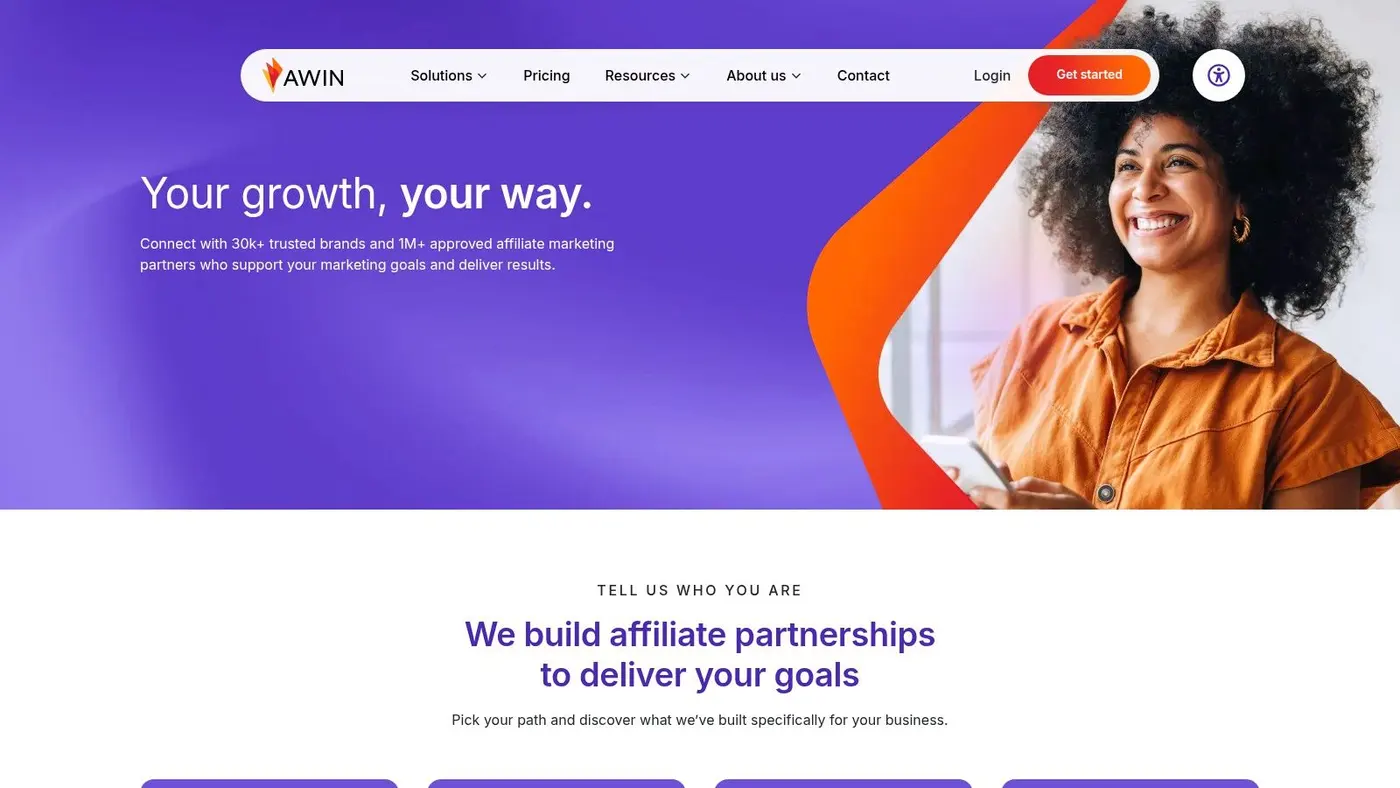
1. Awin
Awin stands out for UK advertisers who want a broad affiliate network and a public entry point for estimating costs. Its model lets advertisers set commissions around sales or other agreed actions, then manage publisher relationships through network reporting and discovery tools. That flexibility is useful, but it doesn't remove the work of choosing partners and setting terms.
Awin Access is listed at £99 plus VAT per month, with a 3.5% tracking fee on transaction value and publisher commissions. That gives smaller ecommerce teams a clearer starting point than networks that require a sales conversation before they disclose pricing. Confirm the current fee structure, eligibility and plan terms directly before budgeting.
Where the published price helps
A public entry price makes it easier to estimate the base cost of operating a programme. It doesn't show the full acquisition cost, because publisher commissions sit alongside network fees, and the right commission depends on your margin and the partner's role. Higher-tier reporting, automation and support may also change the cost.
Awin can suit a brand that wants to test different partnership types, from content publishers to cashback or voucher partners. It's less suited to a team expecting the network to recruit, brief and manage every partner without ongoing advertiser input.
Before signing: Model the monthly fee, tracking charge and publisher commission together, then compare the result with contribution margin rather than revenue alone.
Use a revenue impact calculator to assess whether a proposed commission leaves room for fulfilment, refunds and other variable costs. The key question isn't whether the programme can drive sales, but whether the retained sales justify its total cost.
2. Webgains
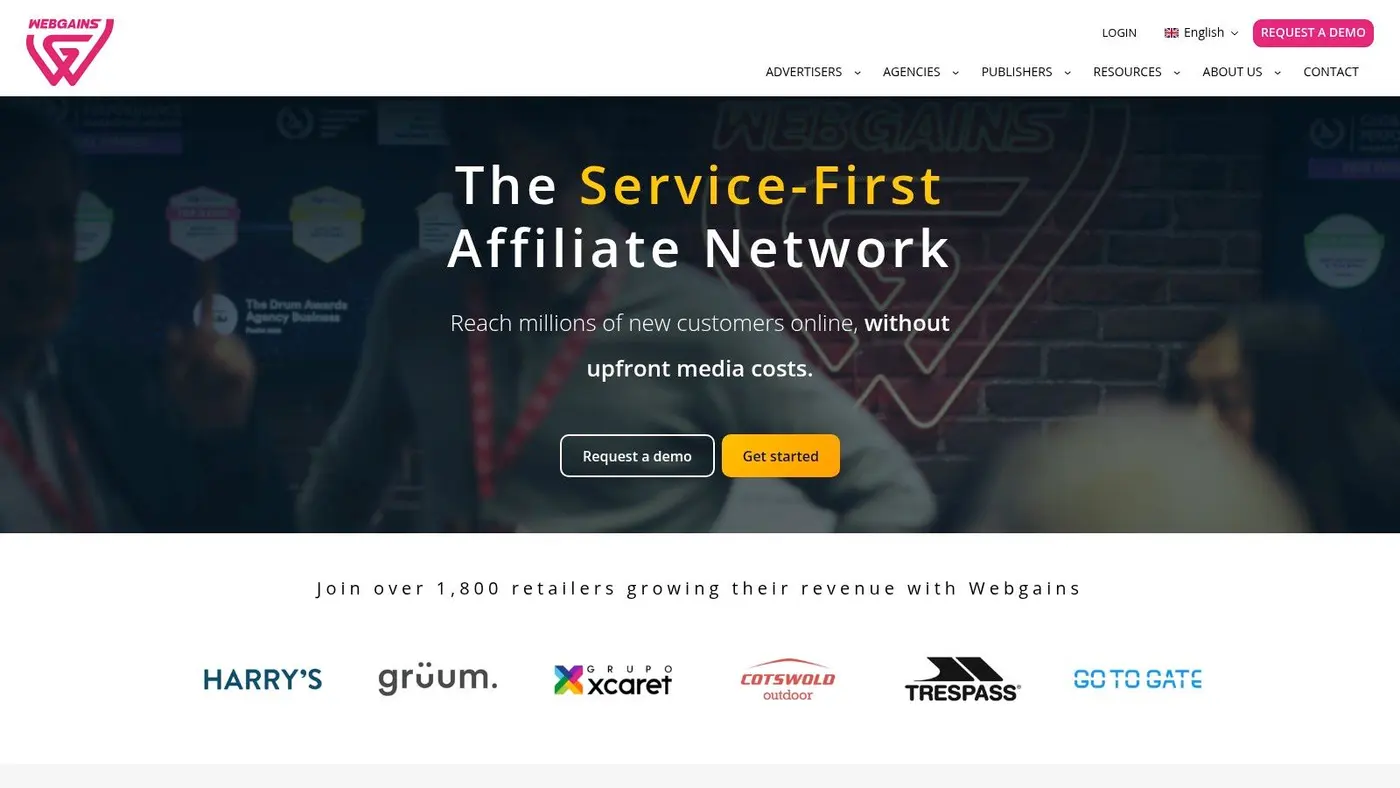
Webgains pairs publisher access with account management and campaign support. That service-led approach can be a better fit than a bare tracking tool for a team that needs guidance on partner strategy, recruitment and programme management. Its publisher mix includes content, cashback, voucher and creator partnerships, giving advertisers different ways to reach shoppers.
Webgains says it supports more than 1,800 advertiser programmes and over 250,000 publishers. Those figures describe the network's stated reach, not the number of relevant partners for your category or the likely volume of incremental sales. Ask for examples of publishers that match your audience, geography and promotional restrictions.
The trade-off between guidance and visibility
The main limitation for early cost comparisons is that advertiser pricing and onboarding terms aren't published in the reviewed materials. You'll need to establish the full commercial model directly, including any fees for account management, setup or programme services. Don't compare a managed offer with a self-serve platform on commission alone.
Hands-on support can be valuable if your team doesn't have capacity to recruit and manage publishers. It can be unnecessary overhead if you only need tracking and already have partner relationships. Ask who will manage the programme day to day, what that work includes, and how partner performance will be reported.
Webgains' public materials describe its service model, but they don't establish what your particular programme will cost. Get the proposed fee structure in writing before deciding whether the support justifies the additional spend.
3. TradeTracker
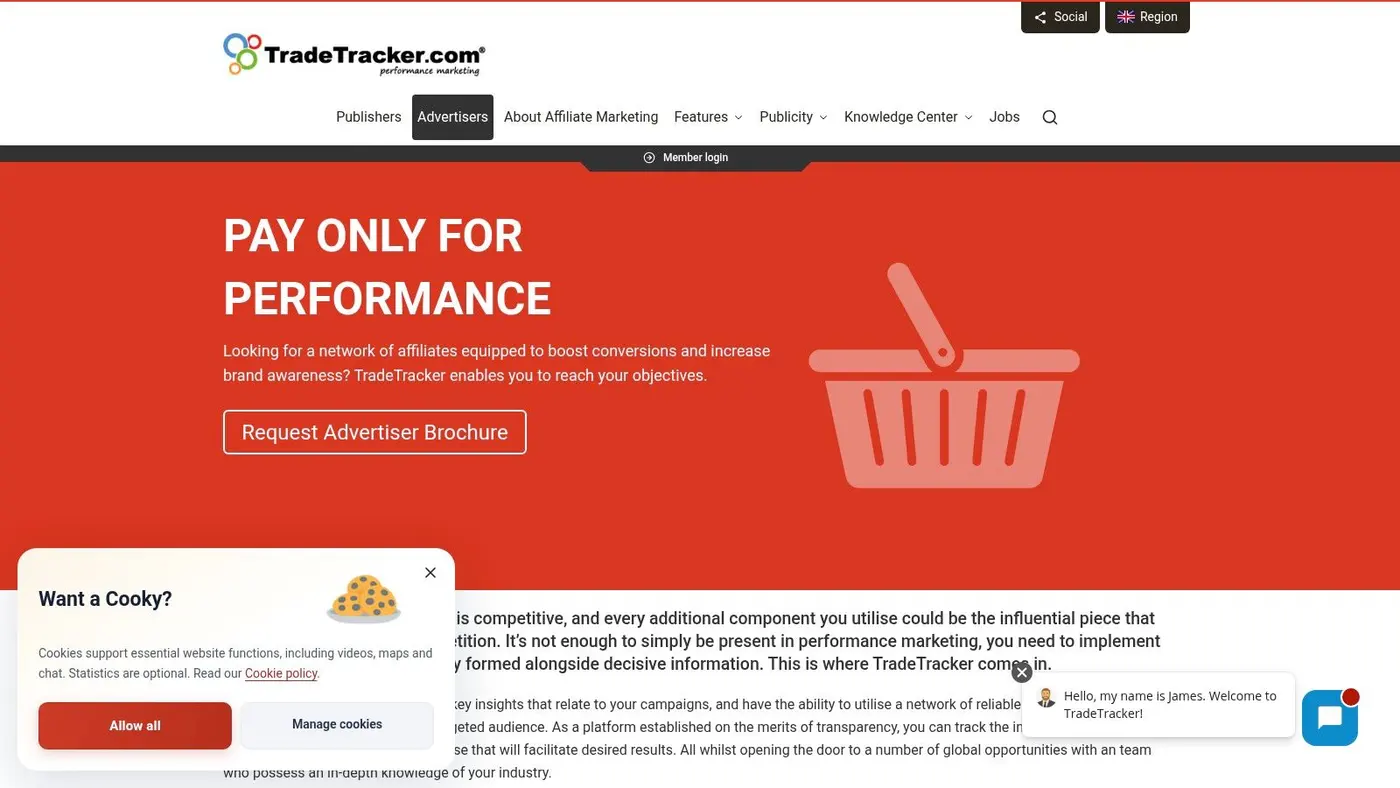
TradeTracker is a performance-focused network with advertiser controls for campaign reporting, publisher approval and transaction validation. Its UK advertiser page also describes account-management support and ecommerce integrations. For a brand that wants the option to influence how conversions receive credit, its attribution features are a point to examine closely.
The platform promotes a “no win, no pay” approach. That shouldn't be read as proof that there are no setup, platform or other contract costs. The reviewed material doesn't publish advertiser pricing or setup terms, so get a written breakdown before comparing its offer with a network that lists an entry price.
Attribution needs to match your reporting
TradeTracker offers multiple attribution models, including custom models. That flexibility matters only if the model fits your own measurement setup and your team understands how credit is assigned across touchpoints. A configuration that differs from your internal reporting can create disputes even when the tracking is functioning correctly.
Ask how the network validates transactions, handles cancellations and refunds, and allows you to review or reject conversions. Confirm whether the attribution model affects the payable commission or only the reporting view. Those are separate questions, and a useful dashboard doesn't settle the contract terms.
The network may suit advertisers who want performance-based campaigns and more control over conversion measurement. It's a less straightforward price comparison until the commercial terms are disclosed.
4. Tradedoubler
Tradedoubler offers affiliate and broader partner-marketing capabilities, with UK and Ireland operations and international coverage. That combination may suit a brand building partnerships across the UK and European markets, particularly if its acquisition plan extends beyond conventional affiliate links.
The company's public UK page invites brands to register interest, but doesn't list advertiser pricing or package details. Its local presence is useful context for a sales conversation, not a substitute for a proposal that spells out costs, responsibilities and delivery.
Broader scope means more to qualify
A small advertiser focused on one product line may not need the full range of partner-marketing services. Before pursuing a broad programme, define the partner types you want, how each will be evaluated, and what support you expect from the network. Otherwise, a wide service offering can make the initial comparison harder rather than easier.
Ask how Tradedoubler would recruit partners for your audience and which parts of the programme are included in the proposed commercial arrangement. If you're expanding beyond the UK, clarify how local market support works and whether commissions, reporting and account management vary by market.
Its combination of UK-market support and international reach could be relevant for businesses with a multi-market plan. But without public pricing on the reviewed page, you'll need to assess fit through a direct enquiry and compare the written terms with a narrower network offer.

5. CJ
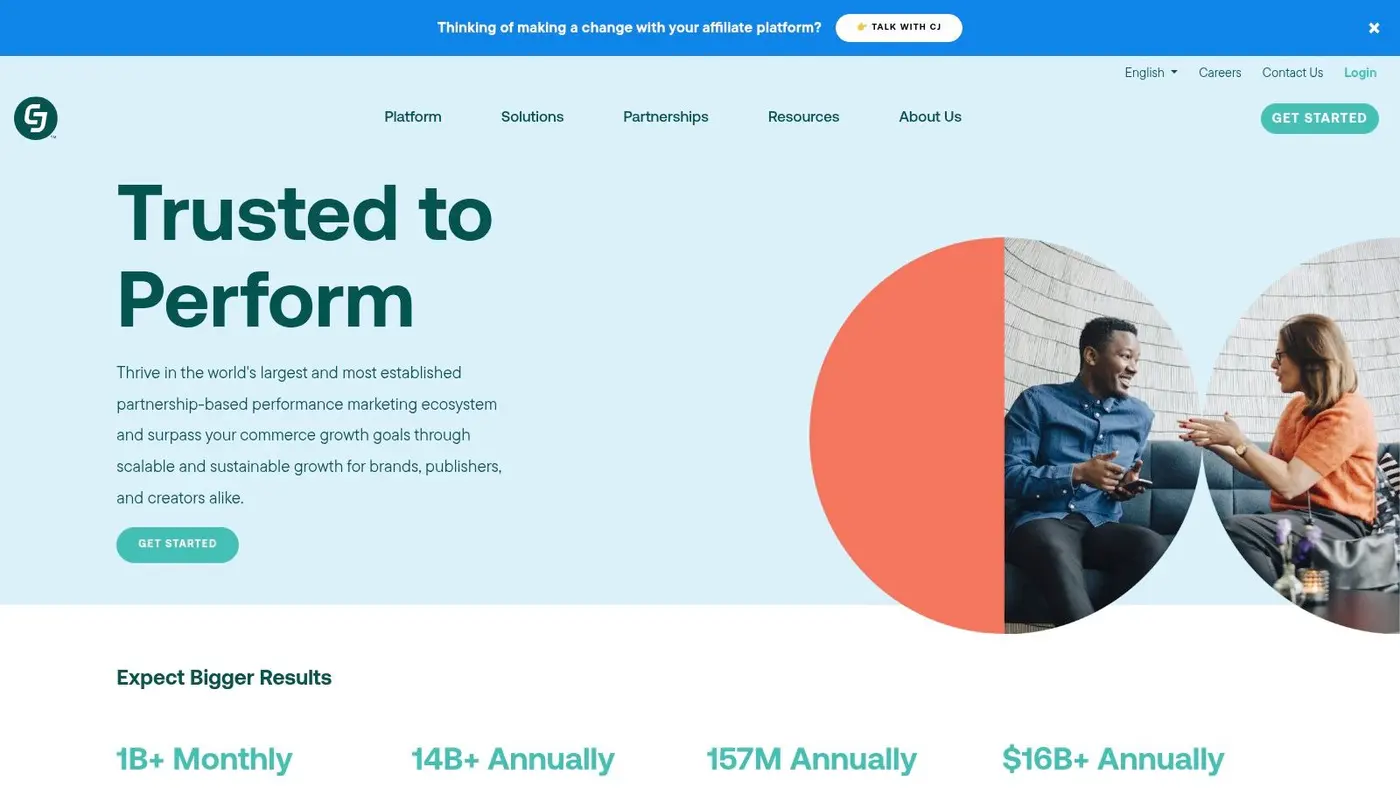
CJ is a conventional affiliate platform connecting advertisers and publishers through commission-based promotion. Advertisers can apply and discuss their requirements with the company, making it an option for brands looking to manage affiliate relationships within an established network rather than relying only on direct partnerships.
The reviewed support information doesn't list public advertiser fees. Treat the consultation as a way to establish the actual commercial structure, not as evidence that the programme will suit your budget. Ask what charges apply beyond publisher commissions and what work the platform or account team will handle.
Evaluate publisher fit, not platform recognition
Access to a wider publisher pool is valuable only if it includes partners relevant to your products and audience. Ask which publisher types are active in your category, what controls you'll have over approvals, and how you can restrict promotional methods that don't fit your brand. A large network doesn't automatically mean a useful one for your specific offer.
Before committing, define the conversion event and the validation process. For ecommerce, that means agreeing how the programme handles cancelled, returned or duplicate orders. For lead generation, establish how you'll judge lead quality and which events make a lead payable.
CJ may suit a brand looking for a familiar affiliate-management model and a conversation about its programme requirements. It is less immediately price-transparent than self-serve options, so compare its written proposal against the full cost of other networks, not just the headline commission.
6. Rakuten Advertising
Rakuten Advertising supports affiliate partnerships for sales, leads, traffic and other defined goals. Advertisers can set programme commissions and attribution rules, while its published policies address tracking links and publisher conduct. That makes the network worth considering when a brand wants partners beyond a single market and needs defined rules around its programme.
The reviewed pages don't make UK advertiser pricing or entry-level availability clear. Confirm both directly, along with any category restrictions or requirements for your offer. Don't assume that an international network's general programme model guarantees that a particular campaign is available to UK advertisers.
Define the action before the payout
The target action should be specific enough to validate consistently. A sale, qualified lead or other conversion needs clear rules about what counts, when it becomes payable and how adjustments are handled. If those definitions are vague, the reported CPA may not reflect the cost of the outcomes your business values.
Ask how publisher quality is monitored, what controls you have over partner approval, and which attribution rules apply. Review the published policies for tracking and publisher conduct, then make sure the proposed contract terms address your own category and compliance requirements.
Rakuten's international reach and configurable programme rules may fit brands with multi-market ambitions. The trade-off is that advertisers need to verify UK availability and commercial terms before judging the platform's cost or suitability.
7. impact.com
impact.com is a partnership-management platform rather than a tool limited to traditional affiliates. It supports affiliate, creator, advocate and other partner types, with discovery, tracking, reporting and payment functionality. That breadth can be useful when a brand wants to bring several partner programmes into one operating model.
Its public pricing lists a lower-cost ecommerce-oriented Starter option for eligible platforms. Check eligibility and current charges before treating that plan as available to your business. Higher tiers offer broader programme and reporting capabilities, while costs may also involve revenue- or payout-related charges.
Match the plan to the programme
A small merchant with a simple referral offer may not need the platform's broader partnership capabilities. A brand adding creators, affiliates and other partner types may value having partner discovery, tracking and payments in one place. The sensible comparison is the cost of the plan against the work and tools it replaces, not just its monthly price.
If you're assessing partners across different customer journeys, consider how you'll avoid giving multiple partners credit for the same sale. Our guide to multi-touch attribution explains why the measurement model matters when several touchpoints influence a conversion.
The gap between last-click and customer-journey reporting can be material: a UK industry source says affiliate touchpoints appeared in 12.4% of standard last-click configurations but in 24.9% of online transactions across the customer journey, as described by Hello Partner's account of the APMC and APMA findings. Compare network conversions with first-party orders and assess incrementality, not just the platform's attributed total.
Explore marketing impact with NotFair
8. Partnerize
Partnerize is built for brands managing affiliate and other performance partnerships over time. Its partner-facing information describes brand connections across retail, travel, financial services, direct-to-consumer and subscriptions, alongside discovery, reporting and payment functionality. That range can suit advertisers coordinating several partner categories or campaigns.
Advertiser pricing wasn't publicly available in the reviewed material. A sales conversation is needed to establish costs and implementation requirements, so don't compare Partnerize with public-price platforms until you have a written proposal.
Platform breadth has an operating cost
A broader partnership platform may be useful when you need to manage multiple partner types, but it can be excessive for an early-stage advertiser running a small affiliate programme. Before evaluating features, list the workflows you need: partner discovery, campaign tracking, reporting, payment administration, or all of them. Then establish which features are included in the proposed package.
Ask how partner performance is separated by campaign and publisher type, and whether the platform supports the reporting your finance and growth teams need. Clarify implementation responsibilities and ongoing account support as well. Those details affect the practical cost of using the platform, even when they don't appear as a commission rate.
Partnerize may suit a brand with an established partnership strategy and several partner categories to manage. It's harder to assess on price alone without a direct commercial proposal and a clear understanding of what the platform will replace.

9. Admitad
Admitad aligns directly with the cost-per-action model: advertisers define an action, publishers promote the offer, and the network provides tracking and payment infrastructure. Campaign terms and commissions vary, so advertisers need to check UK availability and the conditions attached to each offer.
Public advertiser pricing wasn't found in the reviewed material. Some offer-level commission and conversion information may only be available after registration, which makes it harder to build a full comparison before account access. Ask what you can review before launch and what information is restricted to registered advertisers.
Confirm what counts as a valuable conversion
A high volume of tracked conversions doesn't establish that those conversions are profitable or incremental. Define the payable action precisely and ask how you can assess lead or sale quality after traffic starts. For leads, agree what makes an outcome valid. For sales, clarify how cancellations, refunds and repeat customers are handled.
Also confirm which campaigns are available to UK advertisers and whether a particular offer restricts geography, traffic source or promotional method. A campaign's listed payout is only useful if its audience, traffic rules and approval process fit your business.
Admitad's CPA-style model may be a natural fit for advertisers who already know the action they want to buy. The main trade-offs are the need to verify UK terms and the possibility that important offer information won't be visible until after registration.
10. MaxBounty
MaxBounty focuses on performance campaigns where advertisers specify actions such as sales, leads, sign-ups or app installs. Its public materials describe CPA, CPL, CPS and CPI models, along with traffic-source restrictions, postback conversion tracking and advertiser account-management support. Those controls can make it relevant for campaigns with a clearly defined action and strict traffic requirements.
Standard advertiser pricing and campaign terms aren't published in the reviewed material. Confirm UK traffic availability and the commercial terms for the specific campaign you want to run before building a forecast. Traffic volume depends on the offer, payout, geography and publisher interest, so don't assume that a suitable offer will deliver at the scale you need.
Use postbacks to reconcile conversions
Postback tracking can send conversion confirmation from your system to the network, helping you verify outcomes beyond a browser event. The implementation still needs testing: confirm the event fires once, passes the correct identifiers and matches your own order or lead records. Our practical guide to tracking conversions can help your team plan that measurement before launch.
Ask which traffic sources are permitted, how you can restrict them, and how the network handles rejected conversions. Set an approval process that gives your team time to validate outcomes against order or lead quality. A payable action should be clear in both the tracking setup and the contract.
MaxBounty's action-based structure is a potential fit for a tightly scoped campaign. It's less suitable for a team looking for public advertiser pricing or a guaranteed level of UK publisher supply before speaking with the network.
How the ten cost per acquisition networks compare on published pricing, best-fit use and main watch-outs
| Item | Published pricing | Best for | Key watch-out |
|---|---|---|---|
| Awin | Awin Access: £99 + VAT/month, plus a 3.5% tracking fee on transaction value and publisher commissions | Brands wanting broad publisher access and a published UK entry price | Network fees are additional to publisher commissions; advanced features cost more |
| Webgains | Not publicly listed; enquire directly | UK or European brands seeking publisher access and hands-on support | Pricing and onboarding terms require a direct enquiry |
| TradeTracker | Not publicly listed; confirm setup and other contract costs | Advertisers seeking performance campaigns with flexible attribution options | “No win, no pay” may not exclude setup or other costs |
| Tradedoubler | Not publicly listed on the reviewed UK page | Brands targeting UK and European audiences with broader partner marketing | Service range may exceed a small business's needs |
| CJ | Not publicly listed in the reviewed information | Brands seeking a conventional affiliate network and publisher access | Assess publisher fit and commercial terms before committing |
| Rakuten Advertising | UK pricing and entry-level availability unclear | Brands seeking international affiliate partnerships | Review programme terms, publisher-quality controls and attribution rules |
| impact.com | Public pricing includes a lower-cost Starter option for eligible ecommerce platforms; verify current charges | Eligible merchants managing affiliate, creator and other partner programmes | Starter eligibility is limited; costs may include revenue- or payout-related charges |
| Partnerize | Not publicly available in the reviewed material | Brands managing ongoing partnerships across multiple sectors | A sales conversation is required to assess costs and implementation |
| Admitad | Not found in the reviewed sources; campaign terms vary | Advertisers using a cost-per-action model | Verify UK availability and offer conditions |
| MaxBounty | Not publicly listed; confirm pricing and campaign terms directly | Campaigns with clearly defined actions such as leads, sales or installs | Confirm UK traffic availability and campaign suitability |
Shortlist Two Networks, Then Test Before You Commit
Start by choosing the operating model your team can support. If you need partner recruitment, campaign advice and ongoing management, shortlist managed partnership programmes such as Webgains, Tradedoubler or Partnerize. If you want a more defined CPA campaign structure or a platform for managing affiliate partners, compare options such as MaxBounty, Admitad, Awin or CJ. The right shortlist depends on your partner strategy, not the biggest publisher count.
Request written advertiser pricing and commission terms from each candidate. Separate fixed fees, tracking charges, publisher commissions, setup costs and any other costs that could affect the effective CPA. If pricing is public, confirm that the listed plan applies to your business and current requirements. If it isn't, ask for a complete proposal rather than a headline rate.
Next, confirm UK traffic and publisher availability for your vertical. Ask which publisher types are likely to promote your offer, how you can approve or exclude partners, and what restrictions apply to coupons, cashback, creators or other promotional methods. The channel's aggregate numbers are useful context, but a programme's value depends on the customers and partners it brings.
Settle tracking and validation before launch. Confirm how the network records a click, attributes a conversion and handles postbacks or approvals. Reconcile network-reported conversions against first-party order or lead records, and decide how to handle duplicates, cancellations and refunds. The cost of customer acquisition is rising for many UK retailers, with 69% reporting increases in 2025 according to Novuna's retailer findings. That makes quality checks more important than chasing the lowest reported CPA.
Then run a small, capped pilot with a clear target action, a defined budget and a review date. Compare cost per acquisition alongside order value, refund rate, lead quality and repeat-purchase potential. Don't scale because a dashboard shows more conversions. Scale when the outcomes hold up against your margin and validation rules.
For the pilot, test the landing page or offer as well as the partner channel. A network can send qualified visitors, but a weak page can still waste the acquisition spend. Keep the experiment focused, measure revenue as well as conversion rate, and use redirect software options for 2026 if your campaign needs a controlled way to route visitors between landing-page variants.
Otter A/B helps teams test website headlines, CTAs and layouts, then compare conversion rate, average order value and revenue per visitor for each variant. Connect your existing GA4 purchase events or track revenue directly, and use the results to judge whether a partner's traffic is producing value beyond clicks. Visit Otter A/B to start testing.
Stop guessing
Ready to start testing?
Set up your first A/B test in under five minutes. No credit card required.
- 14-day free trial
- No credit card required
- Cancel anytime